QCO implementation in wood panel industry enters new phase as compliance deepens, BIS
steps up capacity building, and industry aligns regulation with strategy.
The QCO implementation in wood panel industry is entering a more mature phase—one defined less by regulatory intent and more by clarity, compliance depth, and strategic alignment across the value chain. The emphasis is now shifting from enforcement to capability building, industry dialogue, and long-term competitiveness.
This transition has been reflected in two recent developments: a high-level industry–government dialogue in New Delhi led by sector stakeholders, and a focused sensitisation programme organised by the Bureau of Indian Standards (BIS) in Chennai to strengthen on-ground compliance capacity.
Industry–government Dialogue on QCO Realities
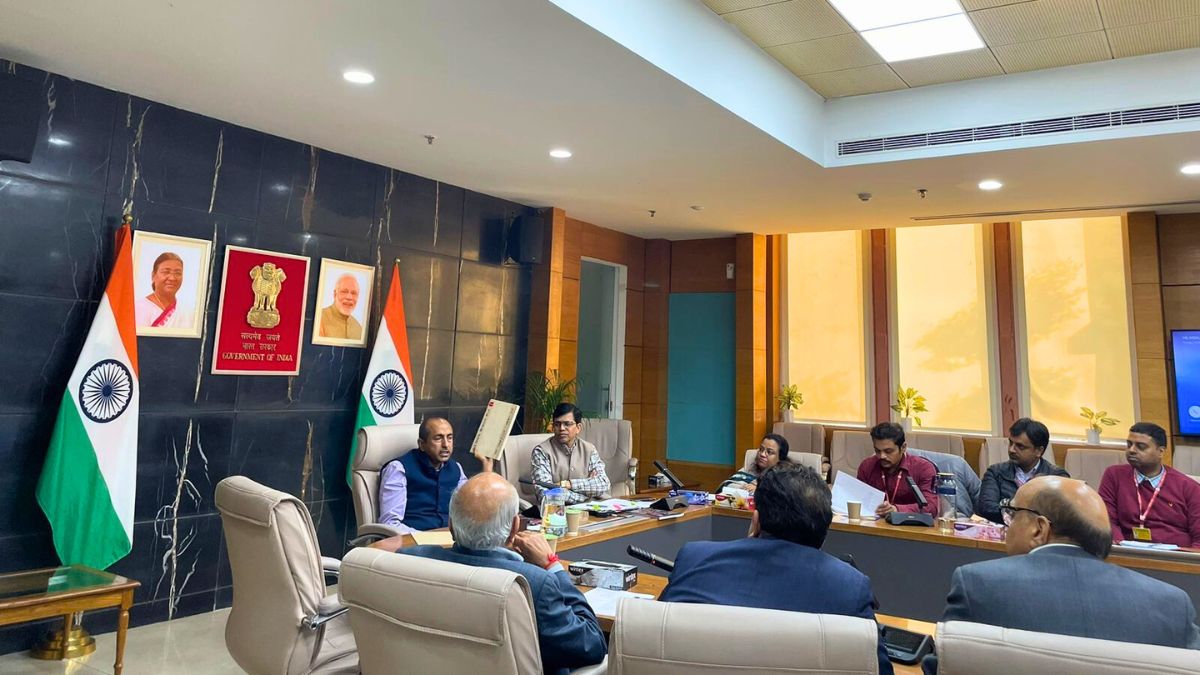
At a meeting held at Vanijya Bhawan on 20 January 2025, primary and affiliated members of the Federation of Indian Plywood & Panel Industry (FIPPI) engaged with officials from the Department for Promotion of Industry and Internal Trade (DPIIT) and BIS to review issues related to QCO implementation in wood panel industry segments such as plywood, MDF and particle boards.
BIS informed participants that 2,473 domestic manufacturing units have already been granted licences, with 168 applications under process. The number of licensed units is
expected to reach around 2,600, signalling steady progress in compliance adoption across
clusters.
FIPPI President Rajesh Mittal acknowledged BIS’s efforts in improving certification turnaround and highlighted that the association has undertaken multiple outreach programmes across manufacturing clusters to improve awareness and preparedness.
Addressing Misconceptions Around QCOs
A key focus of the discussion was correcting misconceptions surrounding the QCO
implementation in wood panel industry, particularly concerns related to raw material
sourcing, product availability, pricing and environmental impact.
Industry representatives clarified that QCOs do not restrict material flexibility. Manufacturers are producing plywood using imported veneers and MDF from imported
pine, reinforcing that quality norms do not translate into sourcing constraints.
On pricing, FIPPI noted that plywood prices have remained largely stable, while MDF and
particle board prices have declined by 10–12 percent, driven by economies of scale resulting from import substitution and higher capacity utilisation.
Regional associations also highlighted that there is no shortage of particle board in key
markets such as Kerala, with locally manufactured boards—using rubber wood—competitively priced against imports. Improved utilisation has also supported better
price realisation for plantation timber farmers.
Compliance Translating into Capacity Utilisation
One of the most visible outcomes of QCO implementation in wood panel industry has been
the improvement in plant utilisation. According to FIPPI, small plywood, MDF and particle
board units across multiple clusters are now operating close to full capacity—a sharp
reversal from earlier years of underutilisation.
This operational stability has restored manufacturing confidence and encouraged
investments in capacity expansion, quality systems and process upgrades.
BIS Steps up Awareness and MSME Support
Parallel to policy-level engagement, BIS has strengthened on-ground capacity building. As
part of its Foundation Day celebrations, the BIS Chennai Branch Office organised a
Sensitisation Programme for the Plywood and Furniture Industries on 27 January 2026.
Senior BIS officials outlined applicable Indian Standards, QCO provisions and certification
procedures, and announced a proposal to extend the BIS concession scheme for another
three years. The scheme offers certification fee reductions of 80 percent for micro units, 50
percent for small enterprises and 20 percent for medium enterprises, providing targeted
relief to MSMEs.
Technical sessions covered inspection protocols, testing requirements, factory audits, market surveillance and compliance obligations. BIS also highlighted digital tools such as
Standards Watch and the BIS Care App to improve access to standards-related information.
From Compliance to Competitive Strategy
As regulatory clarity improves, QCO implementation in wood panel industry is no longer
viewed purely as a compliance issue. For boardrooms, it is increasingly a strategic variable
influencing cost structures, sourcing decisions, supply-chain reliability and long-term
competitiveness.
In this context, India Kitchen Congress (IKC) is emerging as an important platform where
these regulatory and policy developments are analysed through a business and strategy
lens. By convening panel manufacturers, furniture and kitchen brands, machinery suppliers, designers and policymakers, IKC enables leadership teams to interpret regulatory change, benchmark responses and align manufacturing and go-to-market strategies accordingly.
At the forthcoming India Kitchen Congress, FIPPI Senior VP Jaydeep Chitlangia will address industry leaders on ‘Future-Ready by Design: Sustainability and Innovation in India’s Plywood & Panel Ecosystem,’ examining how quality regulation, material innovation and sustainability imperatives are converging to shape the sector’s next phase of growth.
Enjoyed this article?
Receive Kitchen & Cabinetry Intelligence directly in your inbox.
Subscribe to newsletter. Click.
–
ALSO READ