Circular Economy in Furniture: India’s Next Opportunity is no longer just a sustainability aspiration—it is steadily emerging as a business imperative for the country’s furniture and interiors industry. While manufacturers are making progress in reducing waste and improving resource efficiency, building a truly circular ecosystem will require new approaches to product design, material recovery and value-chain collaboration.
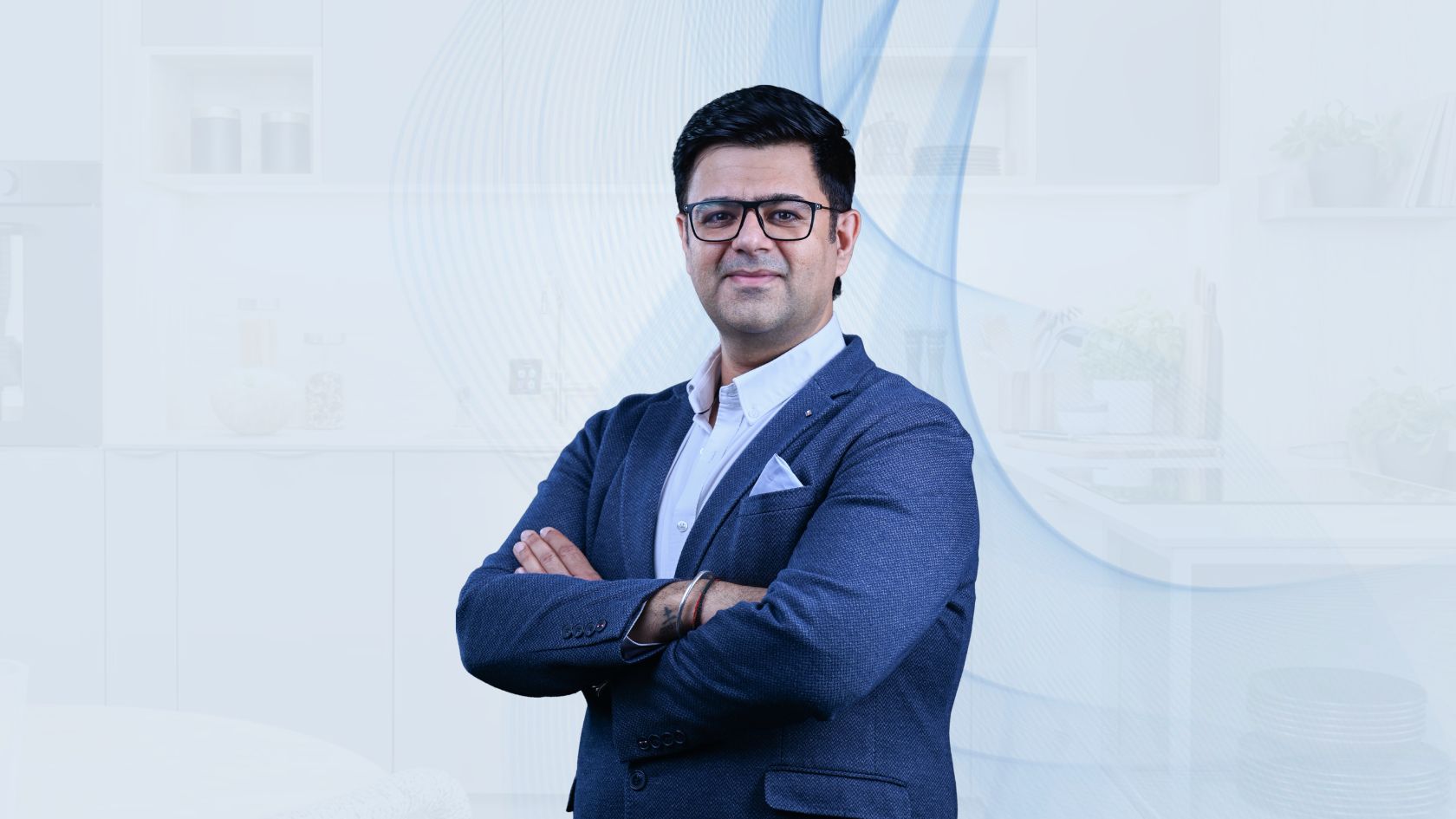
Tushar Verma, Executive Vice President, REHAU India & Subcon, shares his perspective on where India’s furniture industry stands today, the practical steps manufacturers can take, and the opportunities that a circular economy presents for the furniture sector.
Where does India’s furniture industry stand on its circular economy journey? Where do the biggest opportunities lie?
India is still in the early stages of building a circular economy in furniture, though the progress over the past five years has been encouraging.
I believe that sustainability has evolved from a specialist discussion into a business priority for many organised furniture manufacturers. A growing number of OEMs are focusing on material efficiency along with waste reduction besides recycled-content materials and responsible
sourcing. Architects and institutional buyers are also placing greater emphasis on lifecycle performance as well as environmental impact. Having said that, compared to Europe, where circularity is deeply integrated into product design alongside material recovery and policy frameworks, India is still building many of the systems required to close the loop.
The end-of-life recovery, where post-consumer furniture has yet to enter structured collection and recycling systems at scale, remains the biggest opportunity. Our own decades of German engineering expertise in material innovation has been accompanied by an increased focus on sustainable material choices and circular manufacturing practices. Besides, the world’s leading furniture brands such as IKEA, Haworth and Steelcase have contributed to this shift by adopting resource-efficient manufacturing and responsible material selection in their global operations.
I remain optimistic that as organised furniture manufacturing grows in India, similar principles will increasingly be embraced, presenting an opportunity to embed circularity into products and processes right from the start.
What does circular economy look like in day-to-day furniture manufacturing?
Building a circular economy in furniture is often seen as requiring large investments or complex technologies. But interestingly, some of the biggest changes can be based on simple manufacturing practices. For example, a circular furniture factory can reduce material losses by
better nesting, segregation of waste streams, reuse of production offcuts and improved inventory planning. Selecting materials that facilitate recycling and recovery and increasing traceability across production are also key to strengthening the process.
Another key element is collaboration along the value chain. Collaborating with material partners who offer take-back programmes and recycled-content solutions helps manufacturers recover valuable resources and improve material utilisation.
Our experience from global markets has shown that leading furniture manufacturers are adopting these practices very quickly within their operations. Marquee brands have shown how responsible material choices and resource efficiency can become part of mainstream manufacturing. As India’s organised furniture sector continues to grow, similar approaches are slowly becoming part of day-to-day factory operations, delivering benefits for both business performance and long-term sustainability.
Is sustainability making business sense for furniture manufacturers?
The business case is significantly stronger at the moment than it was five years ago. Earlier, sustainability discussions were often driven by compliance or corporate compliances. Nowadays, many manufacturers are discovering direct business benefits. Better material utilisation reduces waste. Efficient resource consumption lowers operating costs. Strong sustainability credentials strengthen relationships with institutional clients, global brands and project consultants.
There is also growing demand from customers who want products with a clear environmental story. Across global markets, recycled-content materials and circular product concepts are becoming part of mainstream purchasing decisions.
So yes, sustainability and profitability are increasingly moving in the same direction. The manufacturers achieving the best results are those who view sustainability as a driver of operational excellence rather than an additional expense.
Why is end-of-life recovery becoming an important part of a circular economy?
This is one of the most important conversations for our industry. Most sustainability efforts focus on the materials entering the factory. But I believe that equal attention should be given to materials leaving the system after years of use. Kitchens, wardrobes and furniture contain
valuable materials that still hold economic value long after the product has reached the end of its service life. The industry will require collection networks alongside sorting infrastructure, coupled with recycling partnerships and greater collaboration across the value chain. Designers, manufacturers, material suppliers and waste management companies all have a role to play.
Another important shift involves designing products with future recovery in mind. Materials that can be separated, identified and reprocessed more efficiently create stronger foundations for circular systems. Large-scale material recovery in India will take time, though the opportunity is substantial. The volume of furniture entering the market today will eventually become a valuable source of secondary raw materials.
How should furniture manufacturers prepare for evolving sustainability regulations?
Global regulations are moving towards greater accountability across product lifecycles. Several industries have already experienced this shift, and similar expectations are likely to expand into additional sectors in the times to come.
For furniture manufacturers, the most productive approach is preparation rather than prediction. Companies should begin building stronger visibility into their material composition, supply chains, recycled content and recovery opportunities. Manufacturers who develop these capabilities early will be in a stronger position regardless of the regulatory direction. Many of the practices associated with circularity also improve operational efficiency, resource productivity and customer confidence. The broader conversation is gradually moving from managing waste to managing resources. That shift has important implications for every manufacturing sector.
How can designers accelerate the transition towards a circular economy in furniture?
Designers influence sustainability much earlier than most people realise. The specification stage shapes a large part of a product’s environmental impact. Material selection, durability, repairability, recyclability and lifecycle performance are all influenced during the design
process. Over the past few years, we have seen a clear shift in the conversations we have with our architectural partners. Firms such as DSP Architects, M Moser Associates, Beyond Design, Creative Designs, RSP Design, Incubis, Sanjay Puri & Associates and Gian P Mathur & Associates are increasingly evaluating materials through the lens of lifecycle value, recycled content, certifications and long-term performance, alongside design aesthetics.
This evolution is encouraging because sustainability becomes far more impactful when it is considered at the specification stage rather than during execution. Designers today play a much larger role than simply selecting finishes or defining visual language. Their decisions influence how long a product lasts, how efficiently resources are used and how responsibly materials are managed throughout their lifecycle.
Strong collaboration between architects, manufacturers and material innovators is therefore becoming essential to creating interiors that combine design excellence with lasting performance and responsible material choices.
What lessons has REHAU learned through its REHAU RETURN programme?
REHAU RETURN has shown us that building a circular economy in furniture becomes much easier when recovery systems are practical and integrated into day-to-day operations. The programme is more focused on bringing materials back into the value chain instead of allowing
them to become waste.
In the furniture segment, we collect leftover edgebands, edge trimmings and production scraps from woodworkers and furniture manufacturers for recycling and reprocessing. Across our other businesses, we also work with installers and industry partners to return residual materials and site waste into the recycling loop.
The scale of the opportunity is significant. In 2024, REHAU generated 24,291 tonnes of non-hazardous waste, of which 20,156 tonnes were recycled. We also recycled 615 tonnes of hazardous waste. Recycled materials today account for 18% of the raw materials used across
REHAU products globally, with a target of reaching 20%.
The biggest learning is that material recovery works when manufacturers, suppliers and customers participate together. Once a collection and recycling system is in place, waste quickly starts looking like a valuable raw material source.
Enjoyed this article?
Receive Kitchen & Cabinetry Intelligence directly in your inbox.
Subscribe to newsletter. Click.
–
ALSO READ