Building a national kitchen retail network is emerging as one of the biggest strategic opportunities in India’s modular kitchen industry. Rising demand from Tier 2 and Tier 3 cities, the shift towards organised retail, and the growing adoption of personalised kitchen solutions are encouraging more companies to strengthen their presence across India.
Yet building a successful kitchen retail network requires far more than opening additional showrooms.
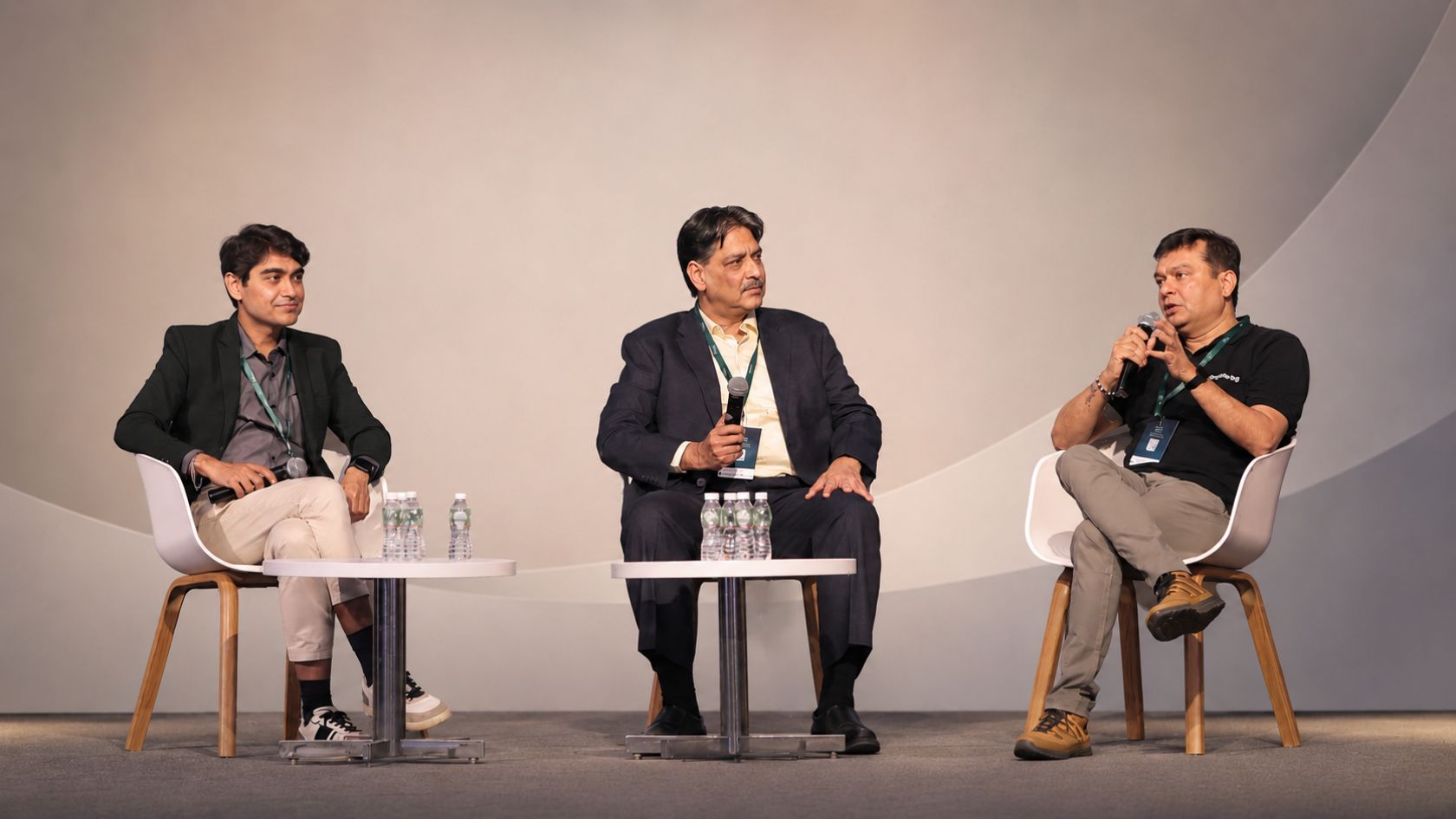
At a fireside discussion moderated by Dr Mahesh M, CEO, Creaticity, at India Kitchen Congress 2026, Ashish Shah, Founder and CEO of Pepperfry, and Dr Dev Narayan Sarkar, Senior VP and Global Head – Consumer Business at Interio by Godrej, shared contrasting approaches to scaling retail businesses. Their discussion highlighted why long-term growth depends on choosing the right business model, investing in people, building repeatable systems and embracing technology.
Choosing the Right Business Model for Growth
Businesses looking to expand beyond local and regional markets must first identify the capabilities that differentiate them.
The discussion highlighted that there is no universal model for scaling a retail business. Instead, companies should first identify the capabilities that truly differentiate them before deciding what to own and what to outsource.
Pepperfry, for instance, has built a marketplace model that focuses on customer acquisition, design consultation and the overall buying experience, while manufacturing, measurement, delivery and installation are handled by specialist partners. Godrej Interio, on the other hand, has built its retail business around its long-standing strengths in manufacturing, design and product quality.
According to Sarkar, businesses should first understand the capabilities that differentiate them before deciding how they want to grow. Referring to Michael Porter’s Five Forces model, he said every business should ask itself one question: What is my entry barrier? In other words, what is it that competitors cannot easily copy? He argued that sustainable competitive advantage comes from capabilities—whether manufacturing, product quality, service or customer experience—that require time, effort and expertise to build.
Describing Pepperfry’s approach, Shah said the company has operated as a marketplace since 2012, connecting buyers and sellers. Outside of generating demand and consulting customers to create a great kitchen or wardrobe, every other part of the process is handled by execution partners. Pepperfry’s role, he explained, is to ensure customers receive a consistent experience through clearly defined processes, policies and service standards.
While their approaches differ, both leaders arrive at the same conclusion: there is no one-size-fits-all model for growth. Businesses must build around their core strengths and develop a model that supports long-term, scalable expansion.
Building a Kitchen Retail Network Through Franchising
Franchising can help businesses expand faster, but both Shah and Sarkar believe it should come only after businesses understand how to run their own operations. Before bringing in franchise partners, companies must first build company-owned stores, learn the nuances of the business and create systems that can be replicated consistently.
Sharing Pepperfry’s journey, Shah said the company first learnt the business itself before rapidly expanding through franchising. In 2022 alone, Pepperfry opened 100 franchise stores using what he calls a ‘franchise-in-a-box’ model. Once a partner signed up, a truck carrying everything required to set up the store—from furniture and paint specifications to air conditioners and fixtures—was dispatched to the location. “You can open the truck and set up a franchise,” he said.
Behind this seemingly simple model, however, lay significant groundwork. The company invested heavily in defining processes, service-level agreements (SLAs), technology systems and feedback mechanisms to ensure every franchise delivered the same customer experience.
Drawing on Interio by Godrej’s experience of operating nearly 200 company-owned stores and more than 1,000 franchise stores, Sarkar agreed that franchising is the way forward. However, he emphasised that businesses should first learn through their own stores before expanding through franchise partners.
According to Sarkar, company-owned stores help businesses understand operational realities, while local entrepreneurs bring the ‘touch of magic’ that large organisations often cannot replicate. Being on the ground, they understand regional customer preferences, construction practices and site-specific challenges far better. He pointed to examples such as the overhead storage lofts commonly found in kitchens across Andhra Pradesh and Telangana, or the ventilation openings often preferred in West Bengal homes—small but important local variations that influence kitchen design and installation. Unlike company-managed stores, local entrepreneurs are better placed to adapt to such requirements, while also building stronger customer relationships within their markets.
For retailers looking to expand nationally, the lesson is not simply to add more franchise stores. It is to first build a business that others can successfully replicate, and then empower local entrepreneurs with the systems, tools and flexibility to deliver the same brand experience.
Watch the 31-min conversation here.
Owning the Customer Experience
According to Shah, outsourcing execution does not mean outsourcing responsibility for the customer. While Pepperfry partners with specialists for manufacturing, measurement, delivery and installation, the company never outsources ownership of the customer experience. “We will own the customer and do everything it takes to get a great home done for the customer,” he said.
This approach requires more than selecting the right partners. For Shah, the distinction is simple: while execution can be outsourced, accountability cannot. Regardless of who manufactures, delivers or installs the kitchen, the customer associates the experience with the brand. That makes ownership of the customer relationship non-negotiable.
Shah also pointed out that as demand grows across regions, businesses should continuously expand their network of reliable partners while ensuring they operate within the company’s quality standards.
The discussion suggests that scale is achieved not by controlling every activity, but by consistently delivering the same customer experience, regardless of who executes the work.
Investing in People
As businesses grow, people become the face of the brand. According to Shah and Sarkar, investing in continuous training, partner development and common operating standards is essential to delivering a consistent brand experience across every location.
Speaking about Pepperfry’s model, Shah said people are at the centre of the business. The company continuously trains its sales teams and franchise partners to ensure they understand the products, processes and customer expectations. Continuous learning and feedback, he said, are essential to maintaining service quality as the business grows.
To reinforce these standards, Pepperfry closely monitors partner performance. The company tracks nearly 6,000 daily transactions, along with store and supply chain performance, using customer feedback and Net Promoter Score (NPS). According to Shah, this helps identify performance gaps early and ensures customers receive a consistent experience across markets.
Sarkar shared a similar perspective but added another dimension. At Interio by Godrej, training extends beyond product knowledge to include hospitality practices inspired by the hotel industry, encouraging frontline teams to treat every customer like a valued guest. The company also follows common recruitment and training standards across company-owned and franchise stores to ensure a consistent brand experience, irrespective of location.
For growing businesses, investing in people is not simply about improving operational efficiency. It is about building teams that can consistently deliver the brand promise, regardless of where the customer walks into the business.
Building an Omnichannel Presence
Today’s customers no longer rely on a single channel before making a purchase. They may discover a brand online, visit a showroom to experience the products, and compare options digitally before making a buying decision.
According to Shah, businesses should stop thinking of customers as either online or offline. Instead, customers simply choose the channel that best suits them at a particular point in time. “It is my duty as a brand to be available to my customers at all touchpoints,” he said.
For kitchen retailers, an omnichannel presence is therefore no longer optional. It enables customers to discover, evaluate and engage with a brand seamlessly throughout their buying journey, while reinforcing a consistent experience across every touchpoint.
Technology Adoption Is No Longer a Choice
Many small and regional businesses hesitate to invest in technology, assuming it is expensive or accessible only to larger players. However, both Shah and Sarkar argued that technology has become an essential enabler of growth rather than an optional investment.
Shah said that whether you are an entrepreneur or a large company, “technology is not an option.” With AI becoming more accessible and affordable, businesses can now use it to improve efficiency across functions—from kitchen design and proposal creation to reducing turnaround time. He shared that preparing a tender, which earlier took three days, can now be completed in nearly two hours using AI.
Sarkar believes AI is also helping level the playing field for smaller businesses. Solutions that once required investments of ₹5–6 crore can now be developed for ₹5–6 lakh, making advanced technology accessible even to regional retailers.
For growing businesses, the opportunity is not necessarily to invest in the most expensive technology, but to adopt the right tools at the right time. Used effectively, technology can improve operational efficiency, enhance the customer experience and make scaling far more achievable than it was even a few years ago.
Mahesh observed that while Shah and Sarkar represent two very different business models, their underlying message is remarkably similar. “Building a successful kitchen retail network is not about opening the maximum number of stores—it is about creating a business that can consistently deliver the same quality, customer experience and reliability, irrespective of location.” Asserting that it requires more than ambition, he noted, “Businesses must build on their core strengths, develop repeatable systems, invest continuously in people, empower the right partners and embrace technology that enables efficient growth.”
India’s modular kitchen industry is entering a phase where opportunities extend well beyond the major metros. The businesses that succeed in building a national kitchen retail network will be those that build scalable systems customers can trust—one showroom, one franchise and one customer experience at a time.
Enjoyed this article?
Receive Kitchen & Cabinetry Intelligence directly in your inbox.
Subscribe to newsletter. Click.
–
ALSO READ