

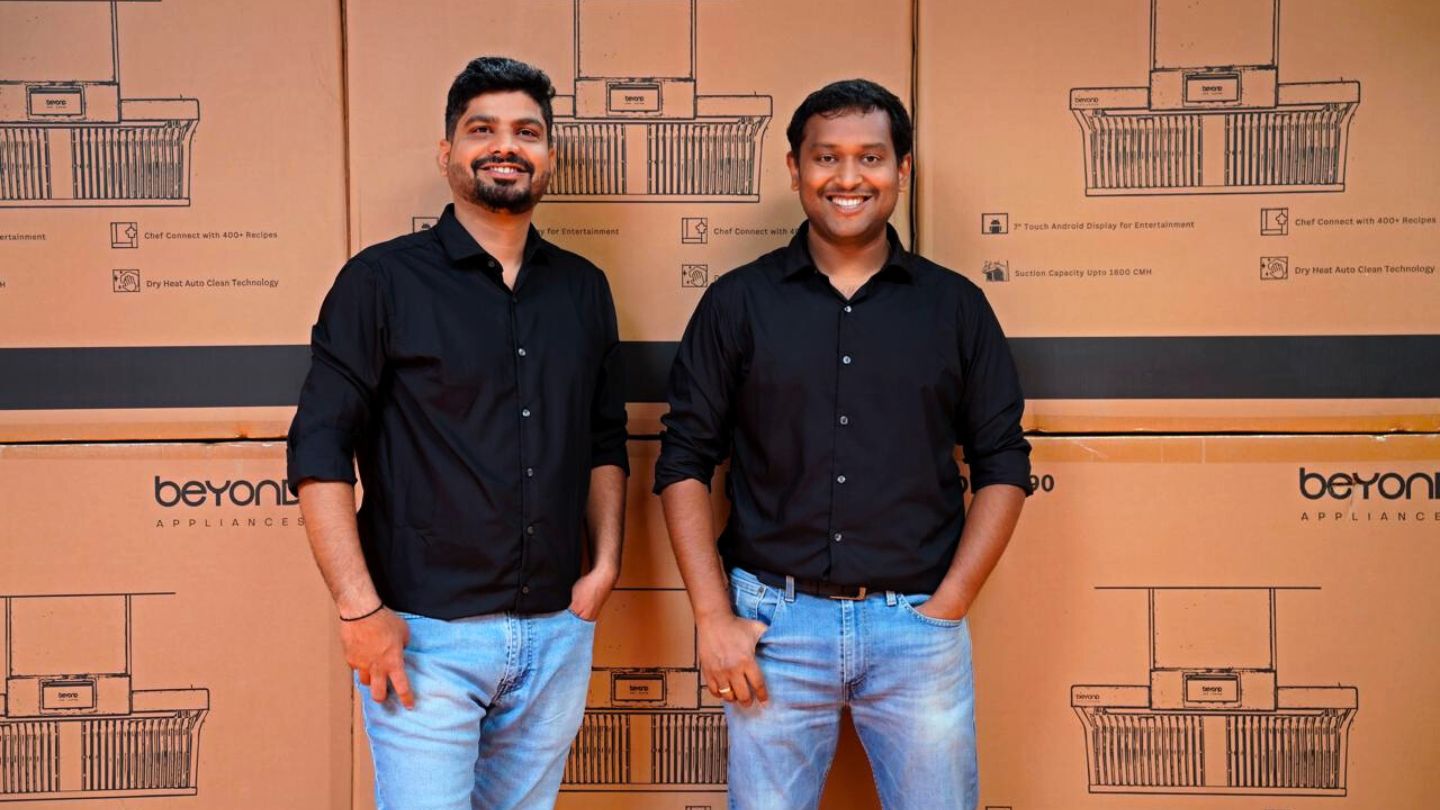
Beyond Appliances: Manufacturing Meets Capital explores how venture funding and
engineering depth are reshaping India’s kitchen appliance market. Founded by the team
behind Mukunda Foods, Beyond Appliances is positioning itself as a manufacturing-led
consumer brand in a category historically dominated by trading models and incremental
product upgrades.
India’s kitchen appliance market has long been dominated by legacy brands and trading-led business models. Product cycles were incremental, innovation was largely aesthetic, and manufacturing depth remained limited.
Beyond Appliances is attempting to change that equation — not just through product differentiation, but through a deliberate coupling of engineering capability and venture
capital discipline.
From Commercial Kitchens to Consumer Appliances
Rakesh Patil and Eshwar Vikas, the co-founders of Mukunda Foods, spent over a decade
building automated kitchen systems for large restaurant chains such as Wow! Momo, Biggies Burger and KFC.
“In commercial kitchens, consistency, efficiency and process control are non-negotiable. We
felt we had solved B2B kitchens quite well,” says Patil, Co-founder and CTO. “But home kitchens had barely evolved.”

What followed was not a product launch, but a research phase. The team entered households, observed cooking behaviour, and identified recurring patterns: mobile phones
in kitchens for timers and recipes; inefficient burners; safety risks from unattended flames;
reluctance to install chimneys due to civil work hassles.
The result was a spin-off — Beyond Appliances — established as a separate entity focused
exclusively on the consumer kitchen.
Product-Market Fit Before Scale
Beyond launched its first products in August 2024, beginning with chimneys and hobs —
categories considered essential but technologically stagnant.
One of its early differentiators was Android-integrated chimneys, featuring a 7-inch
interface that enabled recipe streaming, timers and control functions. But the more
commercially consequential innovation came later: Qube, a plug-and-play chimney requiring no ducting or structural modifications.
In a market where installation friction has long hindered adoption — particularly in rental
housing — Qube’s self-installation model proved decisive. Today, the product accounts for
nearly 30% of overall revenue and roughly half of chimney-category sales.
Beyond’s approach to hobs followed a similar engineering logic. According to Patil, conventional hob burners operate at roughly 50–55% fuel efficiency. Through redesigning
gas-mixing chambers, burners and pan supports — now patented — Beyond claims current
efficiency levels of approximately 72%, with an 80% target in development.
Flame failure devices were also integrated as standard — a safety measure rarely
emphasised in domestic models.
The pattern is consistent: incremental engineering improvements in categories where
differentiation has historically been cosmetic.
Capital as Strategic Accelerator
Beyond’s capital journey is as instructive as its product strategy. In November 2024, early-
stage consumer-focused fund Fireside Ventures led a $2 million seed round, joined by
Dharana Capital and angel investors including Livspace co-founders Saurabh Jain and
Ramakant Sharma, Design Café founder Shezan Bhojani, and former TTK Prestige CEO
Chandru Kalro.
The seed capital served three purposes: strengthening R&D capability; expanding online
distribution; and building working capital for manufacturing scale
Within ten months, the company raised an additional $4 million in Series A funding, again
led by Fireside.
This rapid follow-on investment reflects not merely topline growth, but execution discipline.
Beyond currently reports monthly revenues of ₹5–6 crore, with 40–50% annual growth and
a target of ₹100 crore turnover by FY27.
Fireside’s role, however, has extended beyond capital. As a fund with a strong D2C portfolio
— including Boat and Mamaearth — Fireside supported Beyond’s online-first strategy,
marketplace access and brand architecture.
“Opening doors is critical in early scale,” Patil notes. “They helped unlock the Amazon and
Flipkart ecosystem and structured our digital growth strategy.”
In Sourcing Hardware’s Startup & Capital framework, this is capital operating as capability
amplifier — not passive equity.
Manufacturing Depth: The Real Differentiator
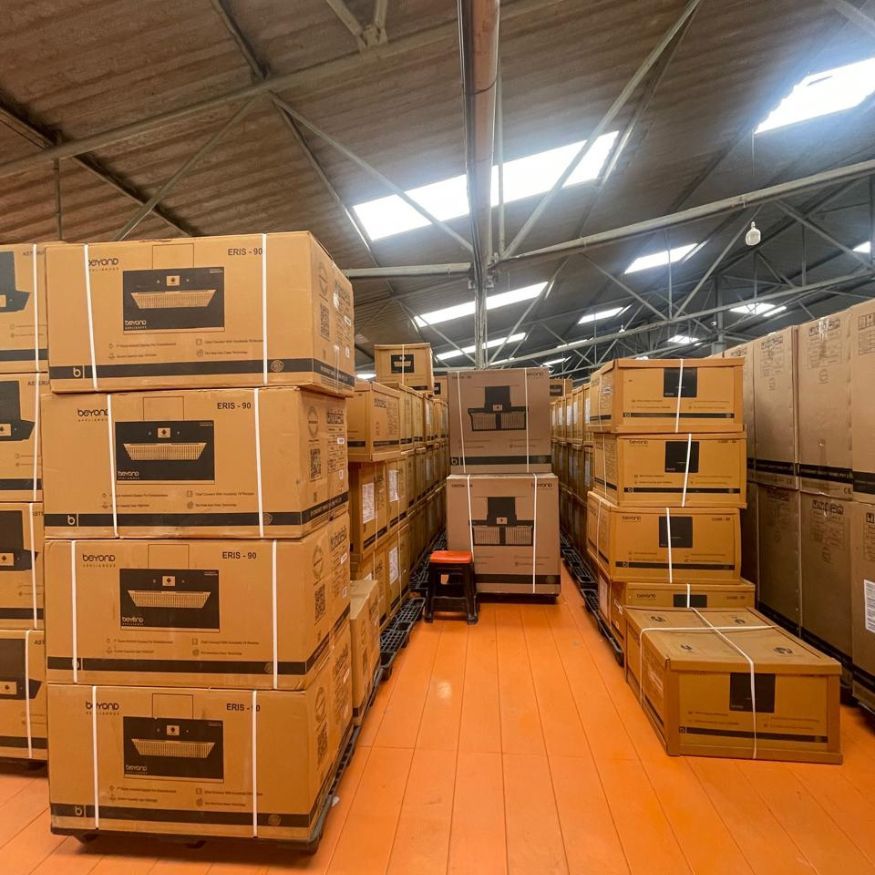
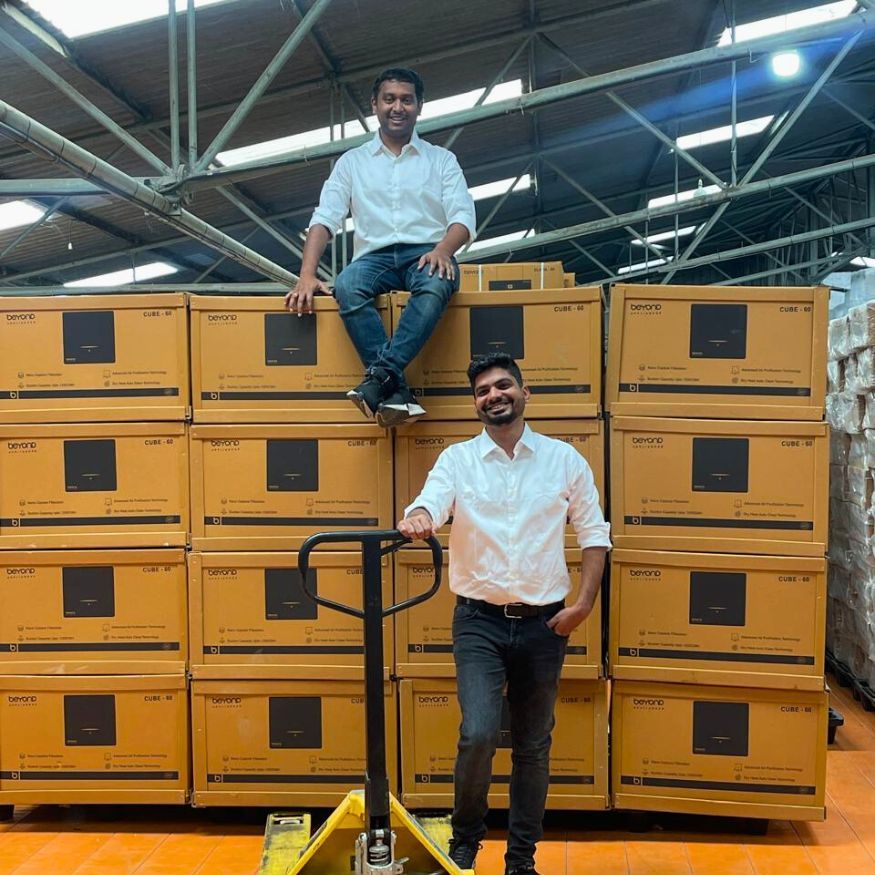
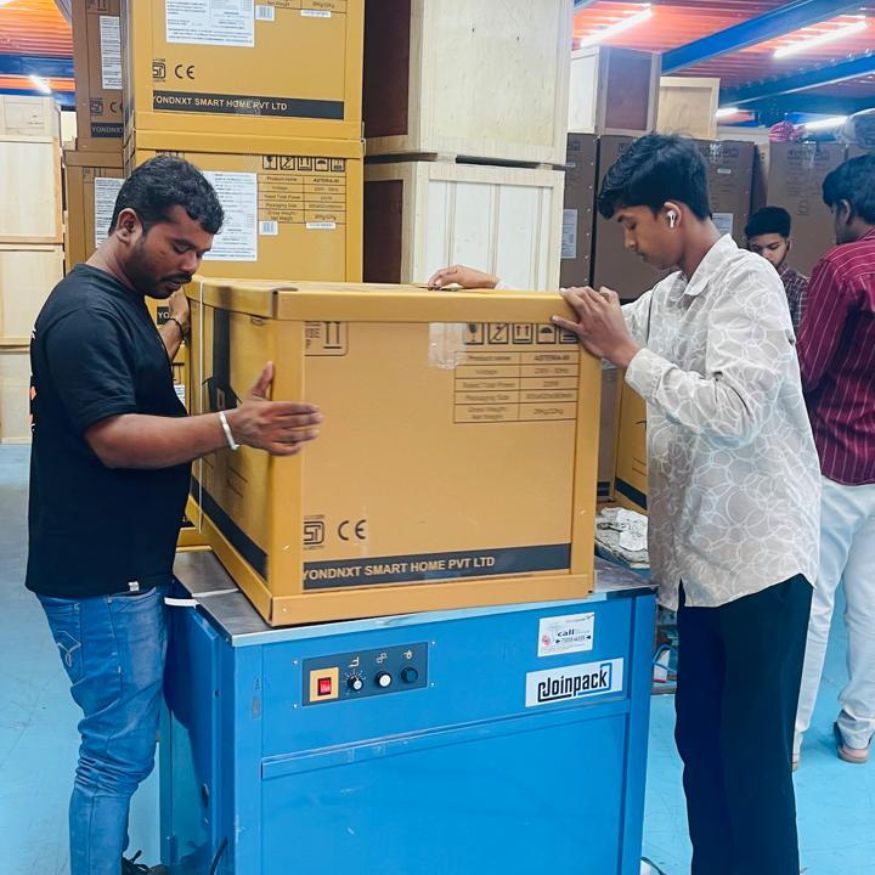
Perhaps the most significant structural element of Beyond’s growth lies in manufacturing.
The company currently operates four facilities across Bengaluru, Chennai, Delhi and
Hyderabad. Two are owned; two operate through OEM lease partnerships.
Critical components — electronics, filtration modules, display units — are developed and
quality-tested in-house at the Bengaluru facility before being supplied in CKD format to
partner factories.
This hybrid model achieves three objectives: asset-light regional expansion; logistics cost
optimisation; and quality control standardisation.
Capacity stands at approximately 25,000 units per month. Lead times have reduced from 90 days to 45 days due to increasing localisation — a shift partly enabled by BIS Quality Control Orders (QCOs), which have restricted finished goods imports and compelled investment in domestic capability.
The impact has been industry-wide: sheet metal processing, glass-top manufacturing and
burner production are increasingly domesticised.
Beyond imports only LCD screens and certain motors, though it is working with vendors to
localise even those.
The Häfele–Isler Parallel
The appliances market has historically separated brand ownership from manufacturing
depth. A relevant comparison is Häfele’s induction of Isler India as an outsourced
manufacturing partner — a move that strengthened local capability while retaining brand
positioning.
Beyond’s OEM lease model reflects a similar thesis: capital deployed not merely to sell
products, but to embed manufacturing standards across partner networks.
The similarity lies not in scale but in structure: capability integration over pure trading. This
marks an evolution in India’s appliance ecosystem, where manufacturing is increasingly
becoming strategic rather than transactional.
Online-First, Offline Precision
Beyond adopted an online-first distribution strategy — an unusual move in a category
traditionally dependent on dealer networks.
The rationale was analytical: online marketplaces provided pan-India demand mapping,
rapid feedback loops and inventory intelligence.
Regional patterns emerged quickly:
- South India contributes roughly 50% of revenue
- West and North together account for about 40%
- East and Northeast contribute the remainder
The company is now selectively expanding offline distribution across Tier 1 cities including
Mumbai, Chennai and NCR, with a stated plan to enter 50 cities over time.
Service infrastructure is scaling in parallel, with 160+ white-collar employees across
functions including R&D, marketing, operations and after-sales.
Capital + Capability = Category Repositioning
India’s smart kitchen market is projected to grow significantly over the next decade. Yet the category remains fragmented and dominated by aesthetic upgrades rather than engineering breakthroughs.
Beyond Appliances is positioning itself not merely as a D2C brand, but as a manufacturing-
led technology company within the kitchen ecosystem.
For the next three years, the company plans to remain focused solely on kitchen categories, resisting premature export ambitions. “We want to become the benchmark brand for Indian kitchens,” says Patil.
In a category long driven by trading, Beyond Appliances is attempting to demonstrate that
engineering discipline, localisation and venture capital can operate in tandem — potentially
redefining how India builds and scales kitchen appliance brands.
ALSO READ