

Furniture Industry Skilling in India: 5 Dos for Manufacturers explores why structured skilling—not hiring—is key to productivity, growth, and retention.
Growth is a function of two things—opportunity and preparation. When preparation does not keep pace with opportunity, growth remains fragile. And in manufacturing, preparation cannot be limited to machines and capital alone.
India’s furniture industry is entering a high-growth phase. The market is projected to reach
nearly US$ 60 billion by 2033. Manufacturers are investing in automation, expanding capacity, and positioning themselves for scale. But without skilled people to run operations
effectively, that growth risks being built on weak foundations.
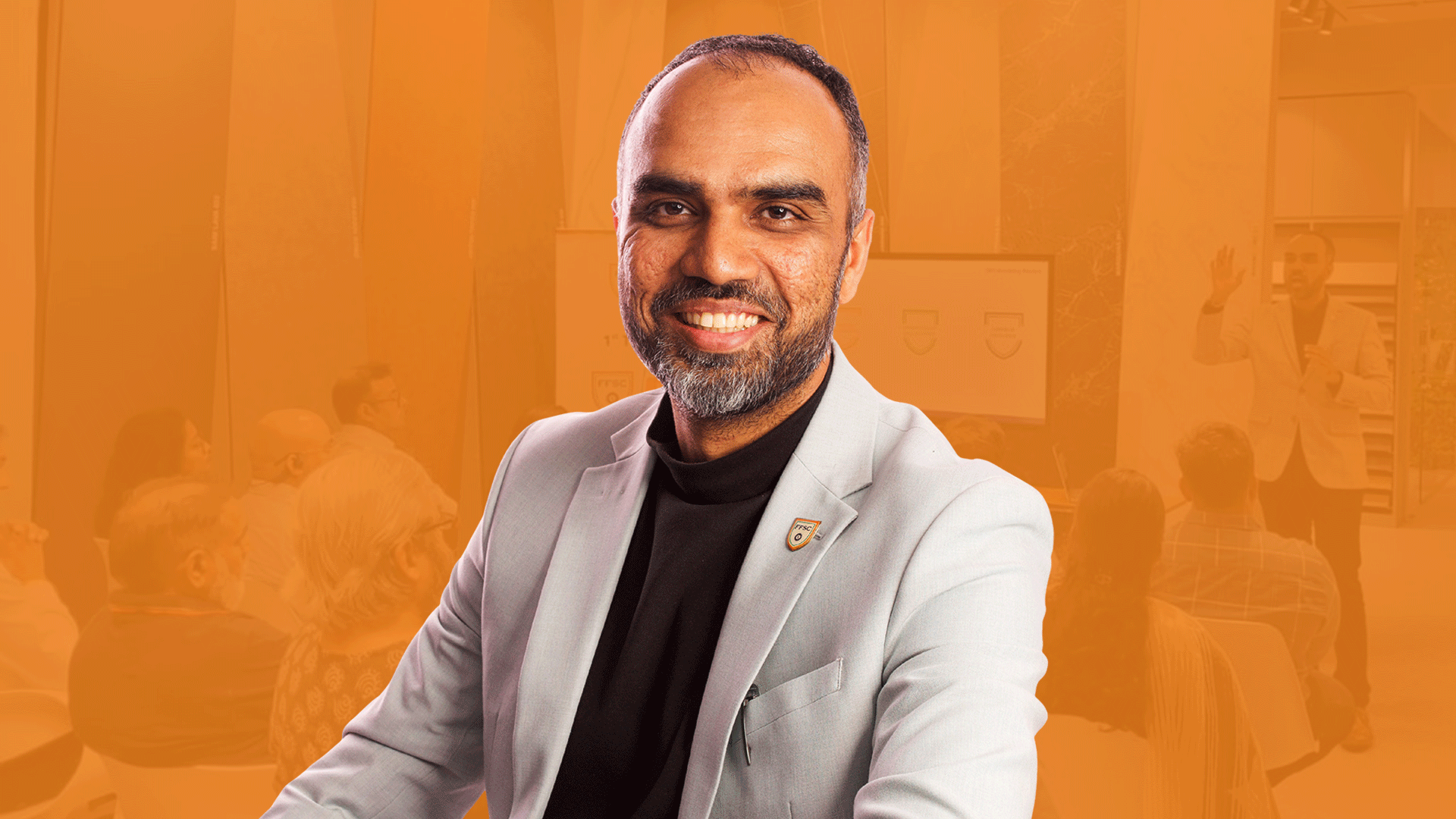
Rahul Mehta, CEO of the Furniture & Fittings Skill Council (FFSC), puts it bluntly:
“India’s furniture sector is spending heavily on machines, expanding factory floors, and chasing a market opportunity that is genuinely enormous. What it is not doing, with anywhere near the same urgency, is building the people who make any of it actually work.”
Skilling Is a Leadership Decision
The furniture industry skilling problem is not new. What is new is the cost of ignoring it.
“When we buy machines or develop products, we go into detail—specifications, output, process,” Mehta explains. “But when it comes to people, we take it for granted.”
That approach, he argues, is no longer sustainable. “Skilling is not an HR function. It is a
leadership function,” he emphasises. “Because it directly impacts product quality and growth.”
In many companies, training is still treated as a one-time activity—a workshop or a short
session. Without leadership alignment, these efforts rarely translate into capability. “It
becomes an event, not a system,” he says.
As manufacturing becomes more structured, this gap is becoming increasingly visible.

Automation Without Skill Is a Risk
Automation is often seen as the solution to workforce challenges. But Mehta cautions that
this assumption is flawed.
“There is a belief that the more you automate, the fewer people you need,” he says. “But
one undertrained operator on a CNC line does not just slow you down—he can stop the
entire line.”
Recalling a visit to a highly automated German facility, Mehta pointed out that scale does
not eliminate the need for people—it raises the bar for capability. “The machine was the
same machine you can buy in India. The difference was entirely the person running it.”
The industry today operates across three realities—manual, semi-automated, and fully
automated production. Each demands a different skill profile. None delivers consistent
output without trained people.
The Limits of Informal Systems
For decades, Indian furniture manufacturing has relied on informal knowledge systems—craftsmen training apprentices, experience being passed down organically, and shopfloors functioning on individual capability.
That model no longer holds.
“Earlier, the scale was smaller, competition was limited, and the informal system worked
well enough. That is no longer the case.”
With GST-led formalisation, rising design complexity, and increasing automation, informal
systems are becoming a liability. Without structured furniture industry skilling and HR
processes, growth remains inconsistent and fragile.
Why More People Doesn’t Mean More Productivity
“Bulk hiring without thought is expensive noise,” according to Mehta. “You are not solving a
capacity problem—you are burying it under headcount.” His approach is counterintuitive
but clear: hire fewer people, invest more deeply in each one, and offer them a visible
growth path.
“When you offer a job, families discuss the salary. But when you offer a career path—what
the person will learn, how they will grow—that conversation changes. So does their
commitment.” Retention, in this view, is not driven by compensation alone—but by clarity,
progression, and purpose.
One of the most overlooked gaps, Mehta points out, is the absence of basic capacity and
role mapping within companies. Most manufacturers do not clearly define their value chain—from design and CAD/CAM to production planning, shopfloor execution, and finishing—before hiring. As a result, manpower is added reactively rather than strategically. “If you don’t know what each stage requires, adding more people will not increase output—it will only increase cost,” he explains. Productivity, therefore, begins with clarity, not headcount.
5 Dos for Manufacturers — Starting Now
For manufacturers ready to act, Mehta outlines a clear starting point:
#1 Map the value chain.
Understand the skills required at each stage—design, CAD/CAM, planning, production,
assembly, and finishing. Hiring without this clarity leads to mismatch.
#2 Build training into systems, not schedules.
Training cannot be a one-day intervention. It must be continuous and aligned with business
goals. “If departmental heads are not aligned, training becomes a picnic—people enjoy it
and remember nothing fifty days later.”
#3 Create mentors, not insecurity.
Senior workers often resist training new hires out of fear of redundancy. Addressing this is
critical. Organisations that succeed are those where experienced workers guide new ones—and see their own growth clearly.
#4 Build internal systems at scale.
For companies with 300+ employees, Mehta is unequivocal: internal training systems are
not optional. Culture, processes, and standards must be institutionalised—not outsourced.
#5 Collaborate at the ecosystem level.
For smaller players, he suggests a shift from competition to collaboration. In Hyderabad,
members of a regional manufacturing association came together to co-create a shared
training academy. “Instead of competing for the same ten skilled workers, they solved the
problem together. That is what maturity looks like.”
Mehta emphasises that retention cannot be solved through salaries alone. What the industry must shift toward is structured career pathways. Instead of hiring for immediate
roles, companies need to communicate a clear 2–3 year growth plan, linking training,
performance, and progression. This not only improves retention but also builds ownership
and alignment across teams.
The Ecosystem Exists — But It Needs Adoption
Over the past five years, FFSC has built a nationwide furniture industry skilling
infrastructure:
- 10+ skill academies
- ~1,200 annual training capacity
- 500+ individuals trained
- 330+ placements in industry roles
- Regional Skill Chapters across key cities
Its programmes span entry-level training, upskilling, apprenticeship pathways, and
WorldSkills preparation.
Importantly, FFSC is also working with companies to build internal capability. Through
initiatives such as the Skill Conscious Entrepreneur programme, FFSC supports manufacturers in setting up HR systems—organisation structures, job roles, mentorship
frameworks, and performance-linked evaluation.
“Even if trained people are available, companies have to be ready to absorb them,” Mehta
said.
Taking the Conversation Forward
The conversation on furniture industry skilling is now moving beyond training centres into
industry leadership platforms.
At the upcoming India Kitchen Congress (IKC) 2026, where FFSC is a Knowledge Partner,
Mehta will be anchoring a session on building human capital for a competitive furniture
industry—bringing together manufacturers and HR leaders to examine how workforce
capability can be institutionalised within organisations.
The message is clear: skill is no longer a peripheral issue. It is central to scale.
Beyond systems and training, Mehta highlights a larger industry challenge: attracting talent
itself. The furniture and woodworking sector is still not aspirational for young people. To change this, industry leaders must actively engage with schools, colleges, and early-career
audiences—showcasing the sector as a viable, modern, and growth-oriented career path.
Without this push, even the best skilling infrastructure will struggle to meet long-term
demand.
The Call That Cannot Be Deferred
Mehta believes the next step must come from industry itself. He is advocating for a simple
idea: companies committing to fund training in proportion to their scale.
“If a thousand companies each sponsor just two candidates a year, that is 2,000 skilled
workers entering the industry annually,” he says. “The model is proven. What we need now
is participation.”
The opportunity is visible. The infrastructure exists. The proof is in place. What remains is a
decision.
In a sector poised for growth, the most important question may now be the simplest: Are
you building the capability to sustain it?
ALSO READ