

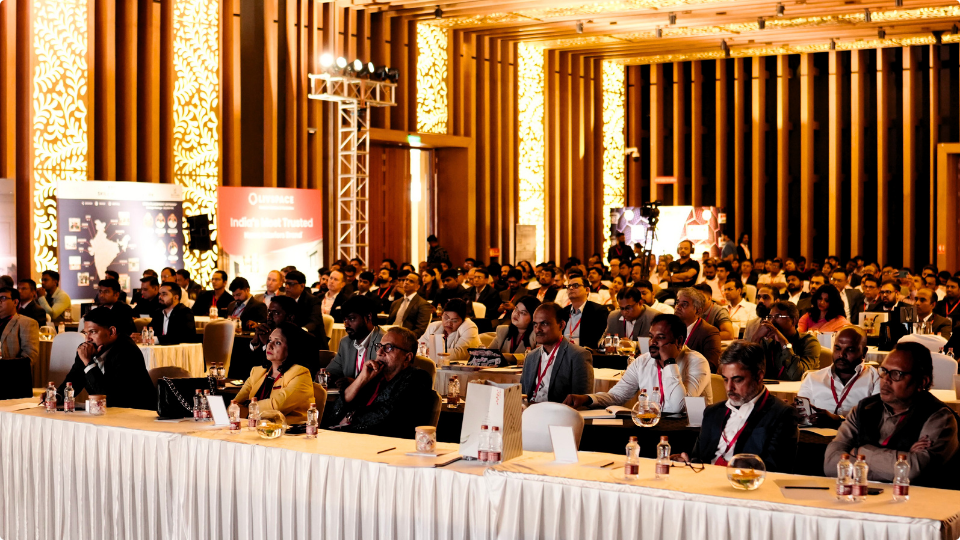
IKC – Driving Growth in Modular Furniture. India Kitchen Congress 2025 showcased roadmaps, skilling, and innovation for sustainable industry growth.
India’s furniture market is on a rapid growth trajectory—projected to expand from US$17 billion in 2021 to US$37 billion by 2026, according to Invest India. Within this surge, modular kitchens and panel furniture are becoming pivotal segments. The government is also nudging the industry towards a level playing field through Quality Control Orders (QCOs), compelling companies to adopt compliant materials and standards.
Equally urgent is the skilling imperative. With the apprenticeship mandate under the Skill India Mission, enterprises across the furniture and woodworking ecosystem are being encouraged—indeed, required—to integrate certified trainees into their operations. Building a workforce that can deliver consistent quality at scale has become both a business necessity and a regulatory expectation.
Against this backdrop, the IKC 2025, held in April at Bengaluru, set out to help the ecosystem move from good intent to near-term action.
Forum with Purpose
Since 2011, IKC has served as the industry’s working ground where practitioners, suppliers, designers, and policymakers exchange real-world lessons. The 2025 edition
sharpened this mission with three clear objectives:
1. Set a shared agenda for sustainable and scalable growth.
2. Translate priorities into action through nine actionable roadmaps with measurable metrics.
3. Mobilise the ecosystem by connecting stakeholders and recognising excellence through the IKC Awards.
As conference director Deepak Gupta put it: “Our goal this year was simple—help companies move from ‘what we should do’ to ‘what we will do next,’ armed with clear
tools and partnerships.”
Key Takeaways: What the Industry Must Do
The deliberations across sessions yielded three big lessons:
- Sustainability must be designed in, not bolted on. This means traceable, safe materials,
repairable products, and supply chains that respect both people and the planet.
- India is many Indias. Regional diversity in cooking styles, budgets, and languages
demands hyper-local strategies rather than one-size-fits-all solutions.
- Growth depends on seamless journeys. From online discovery to in-store design,
installation, and service, consumer experience must be frictionless, and none of it scales
without skilled manpower and disciplined processes.
The IKC 2025 White Paper, released following the conference, distilled these lessons into nine roadmaps covering areas such as circular design, consumer localisation, manufacturing excellence, export readiness, channel productivity, and people-skills-governance.
Strong Turnout and Rich Representation
IKC 2025 saw 505 attendees representing 198 firms, making it one of the most inclusive
editions yet. The composition reflected the industry’s full spectrum:

The conference hosted 32 speakers, 13 exhibitors, and was powered by 5 sponsors and
8 institutional partnerships.
Themes and Tracks
The programme blended high-level strategy with hands-on learning.
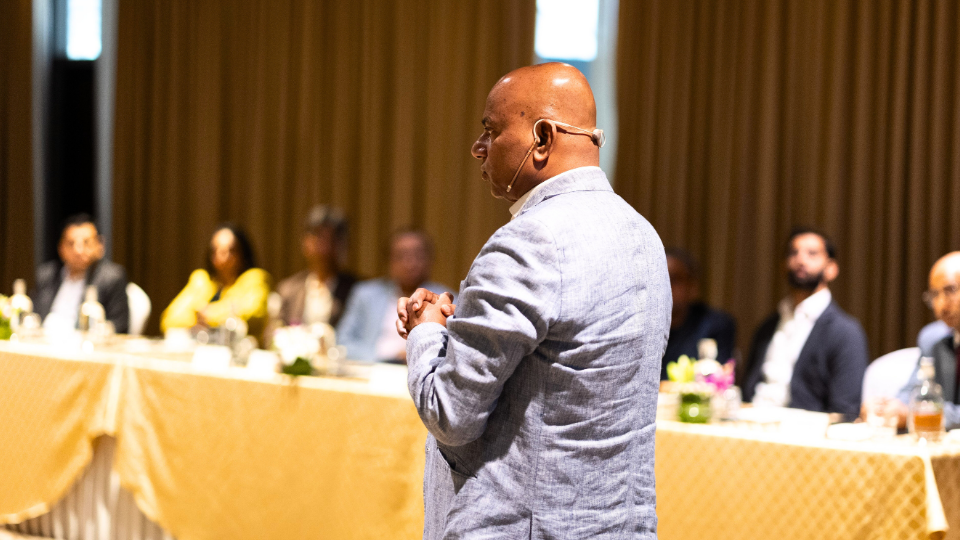
- Keynote Session: State of the Industry featured Rajesh Mittal (FIPPI), Santhosh Kumar (ANAROCK), Linn Roslund (IKEA South Asia), Bijou Kurien (RAI), and H S Manikandan
(Pidilite).
- Business Track explored investment scenarios, growth strategies, and technology’s role in manufacturing and design.
- Design Track debuted as a permanent vertical, offering three masterclasses on kitchen experience centres, design sales strategies, and Indian kitchen design, with participation
from ADI and IIID.
- CEO’s Power Breakfast offered C-suite leaders mentorship from Bijou Kurien, whose talk on empowering leaders for long-term growth left a lasting impact.
Awards: Raising the Bar
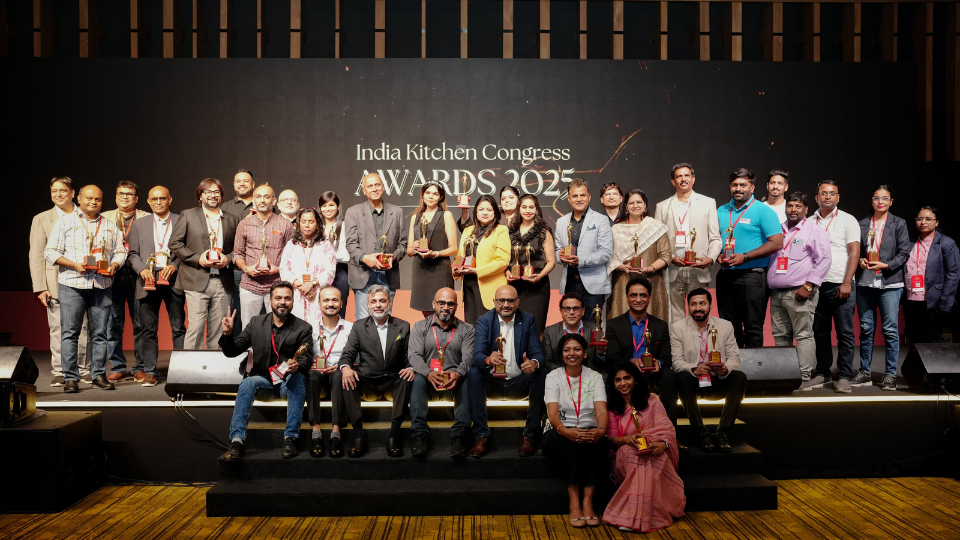
The 11th edition of the India Kitchen Congress Awards marked a defining milestone. Moving entirely online, the judging process brought new transparency and professionalism.
From hundreds of nominations across seven categories—Retail Design, Marketing Communication, Manufacturing, Technology, Kitchen Design, Skill Development, and Person of the Year—33 winners emerged.
For the first time, many companies entered multiple categories, reflecting both ambition and the Awards’ rising stature as the benchmark for excellence. The Jury, drawn from cross-functional domains, judged entries against unique, well-defined criteria, reinforcing the Awards’ credibility.
The IKC Awards 2026 are now open for nominations. Apply here.
Highlights and Milestones
- Growing International Engagement: Perspectives from IKEA, Nolte (Dubai), and imos
AG (Germany) highlighted the conference’s increasing global relevance.
- Driving Growth Through Collaboration: Partnerships with apex bodies like FFSC ensured that skill development and certification were firmly embedded in the industry agenda.
- Book Launch – The Interior Designer’s Sales Blueprint: Authored by Gopal Dwivedi, the book distilled years of experience into frameworks for client acquisition and pricing.
- Exhibition: The cost-effective information-counter format allowed exhibitors like Coohom, Electrolux, Greenply Samet, Hepo, Interwood, Livspace, and Pidilite to showcase innovations.
Sponsors and Partners
IKC 2025 was made possible with the support of leading industry players:
- Gold Sponsors: Greenply Samet, Pidilite
- Silver Sponsors: Hepo, Interwood, Livspace
Knowledge and institutional partners included FFSC, ADI, IIID Bengaluru, RDI India, FIPPI,
FUMMA, IWMMTA, and MFMA Hyderabad.
Why IKC Matters
At its heart, IKC is more than a conference—it is a movement. By convening 500+ stakeholders and producing actionable tools like the White Paper, IKC 2025 equipped the ecosystem to tackle immediate challenges.
Its impact extends beyond the two-day event:
- Companies go back with roadmaps for the next 12 months.
- Designers gain frameworks to monetise creativity.
- Entrepreneurs find partners for pilots and scale-ups.
- Policymakers and skilling bodies align with industry needs.
As Gupta reminded delegates: “Pick one or two moves that fit your context, start this quarter, measure honestly, and share what changed—so the ecosystem compounds
learning.”
Looking Ahead
With its 2025 edition, IKC cemented its role as the premier forum for India’s modular kitchen and furniture ecosystem. The introduction of the Design Track, the professionalisation of the Awards, and the emphasis on measurable roadmaps signal a
maturing platform.
As the industry gears up for the next edition, the challenge is clear: keep the momentum, deepen collaboration, and ensure that sustainability, consumer insight, and skilled execution become the everyday practice of the sector.
India Kitchen Congress 2026 will be held on April 10 in New Delhi.
While the 11th edition reinforced its role as the definitive industry platform, India Kitchen Congress will continue shaping the modular kitchen and furniture ecosystem in India.