

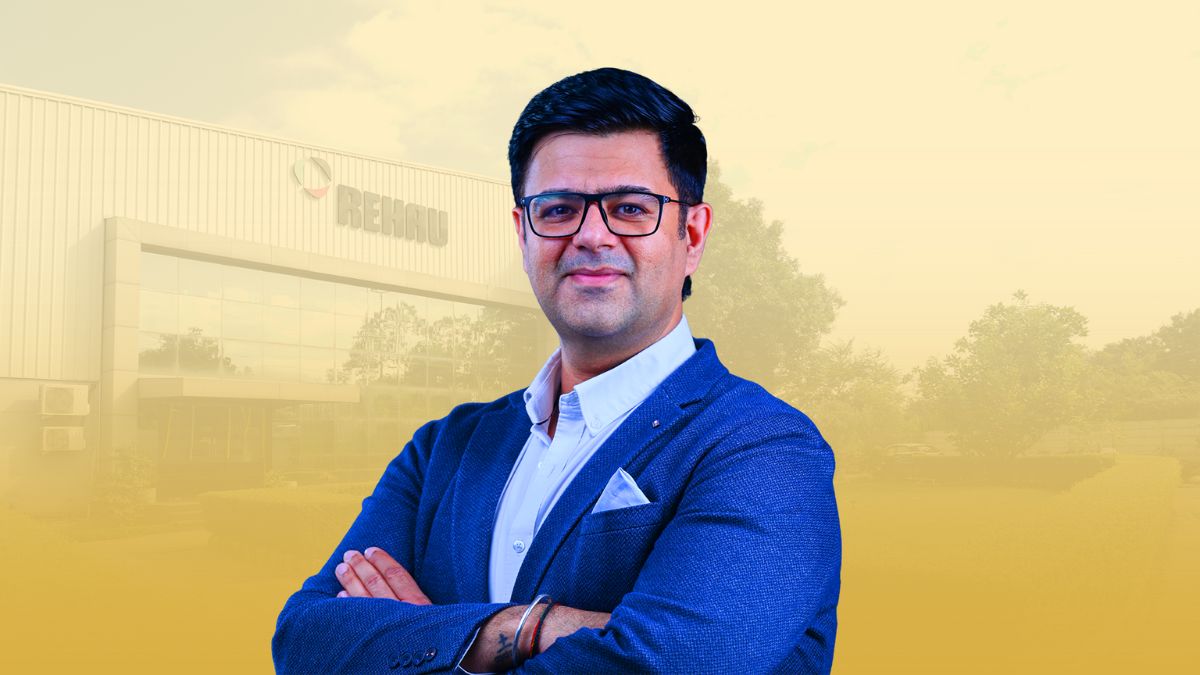
REHAU India Strategy Reset: From Edgebands to B2B2C reflects how the global furniture components major is navigating a volatile phase for India’s furniture industry in the aftermath of the US tariff turmoil. A short-term slowdown in exports—particularly to the US hospitality market, even as alternative markets are yet to open up—is a key factor compressing margins for furniture manufacturers. As a result many players have shifted their focus back to the domestic market, intensifying competition.
At the same time, consumer expectations have evolved. India, often described as a value-
for-money market, is now seen as a ‘money-for-value’ market. Customers are willing to pay a premium if they see clear value—whether through design, brand, or performance. For
component suppliers, this shift raises the bar on both product quality and service delivery.
Even international brands operating in India are increasingly realising this evolution. For
REHAU, a global furniture components major headquartered in Germany, the India story
today is less about expansion and more about recalibration.
Rethinking Strategy
REHAU entered the Indian market in 1997 and has since built a strong B2B presence by supplying edgebands, surfaces, laminates, and solid surfaces to furniture manufacturers,
modular kitchen brands, and cabinetry makers.
“Export volatility, margin compression, aggressive pricing by local players, and rising customer expectations around service and responsiveness have prompted us to strategically reset our business priorities in the subcontinent,” said Tushar Verma, Executive Vice President and Country Head – India Subcontinent, while speaking to Sourcing Hardware recently.

Against this backdrop, REHAU has initiated its strategic reset across three key fronts—strengthening its core edgeband business through sharper portfolio segmentation, rebuilding manufacturing depth and localisation and, most significantly, transitioning from a
traditional B2B model towards a B2B2C engagement strategy through experience-led platforms, shared Verma. This three-pronged approach sits at the core of the REHAU India
strategy reset, as the company adapts to shifting market realities.
Organisational Reset: India as a Capability Hub
Beyond strategy and portfolio changes, the REHAU India strategy reset also includes formalising the company’s organisational footprint in India. Verma noted that the company
historically did not operate with a clearly defined India headquarters, but has now established Gurugram as its official HQ, having moved into a new office recently. The move
is part of a broader effort to consolidate leadership and decision-making closer to the market.
At the same time, REHAU continues to operate a shared services backbone out of Pune,
where legal, IT and finance teams are based. India is also increasingly supporting select
international back-end operations for markets such as Indonesia, Spain and Italy, underscoring its growing role within REHAU’s global operating model, beyond being a standalone sales market. Sales offices in Mumbai and Bengaluru, along with teams located
at manufacturing sites, complete the company’s multi-hub India structure.
Experiential (B2B2C) Shift
One of the most visible outcomes of this reset is REHAU’s counterintuitive move towards
experience-led engagement—not only for its partners, but also for end consumers—with
the launch of its flagship experience centre, House of REHAU, in Gurugram.
Traditionally components have been marketed directly to furniture OEMs, even though the
route has been the distribution network. The timber and hardware trade, the default channel for all things that go into making furniture, has never been end-customer friendly in the classical sense of convenience, service and overall experience. Edgebands particularly are not the hero product at these outlets.
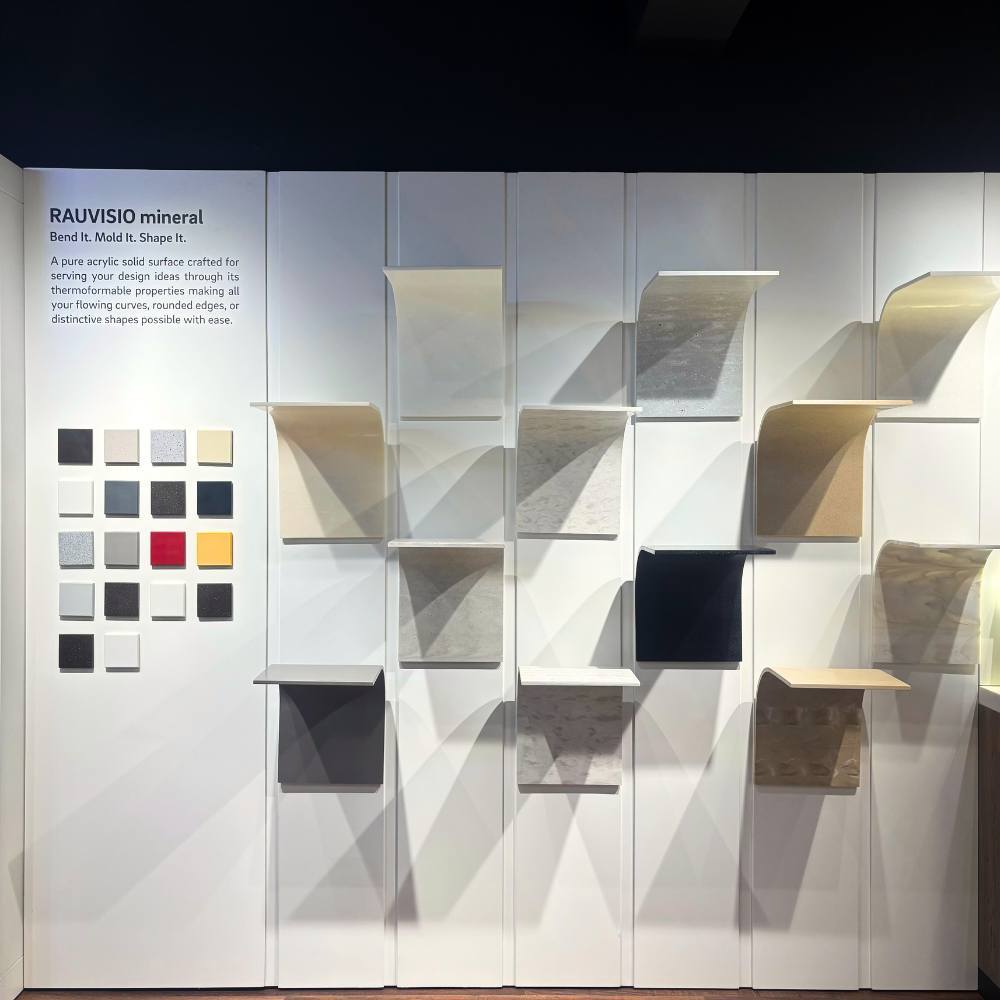
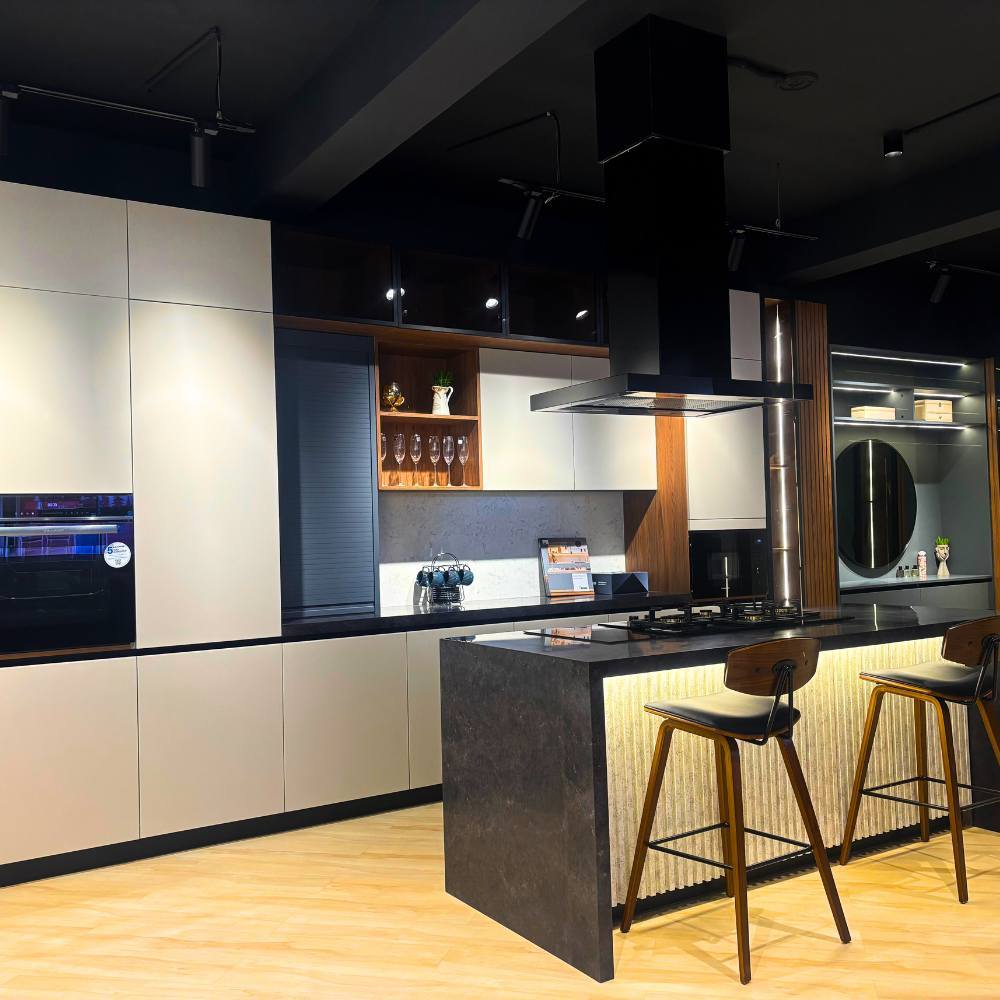
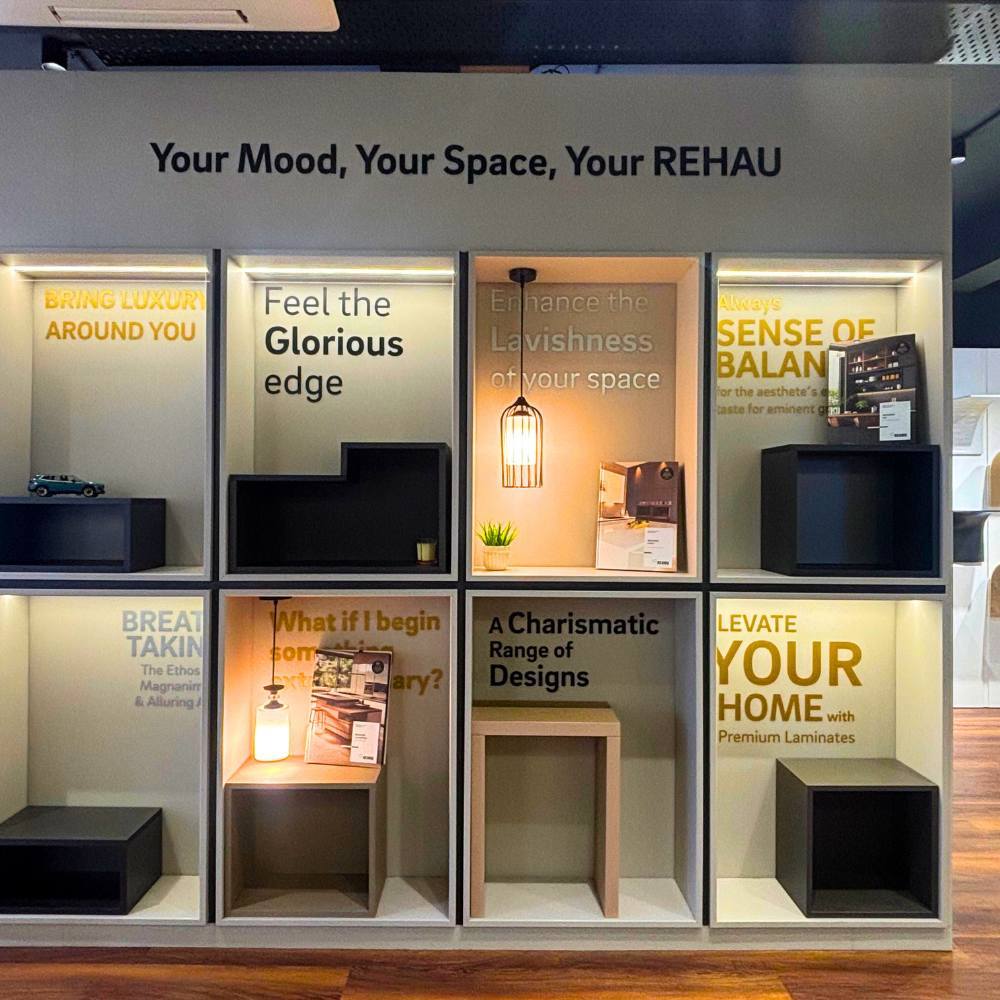
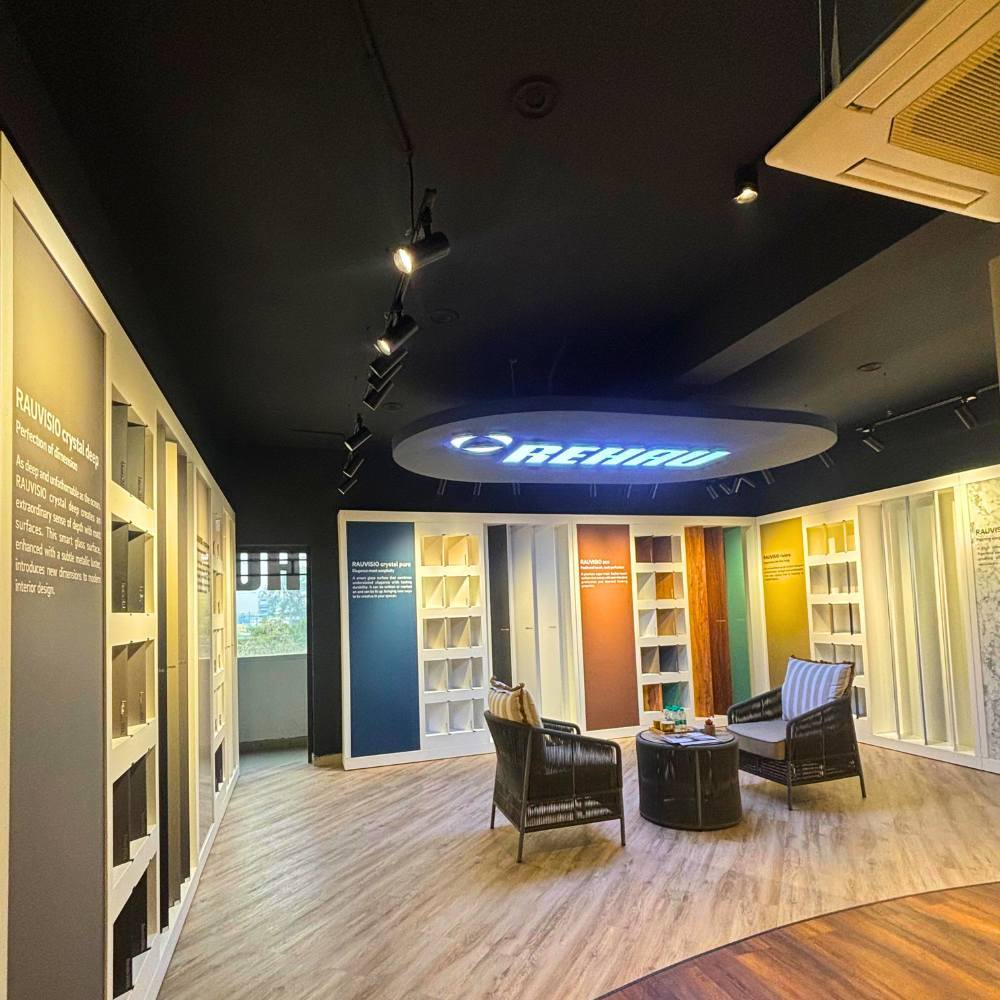
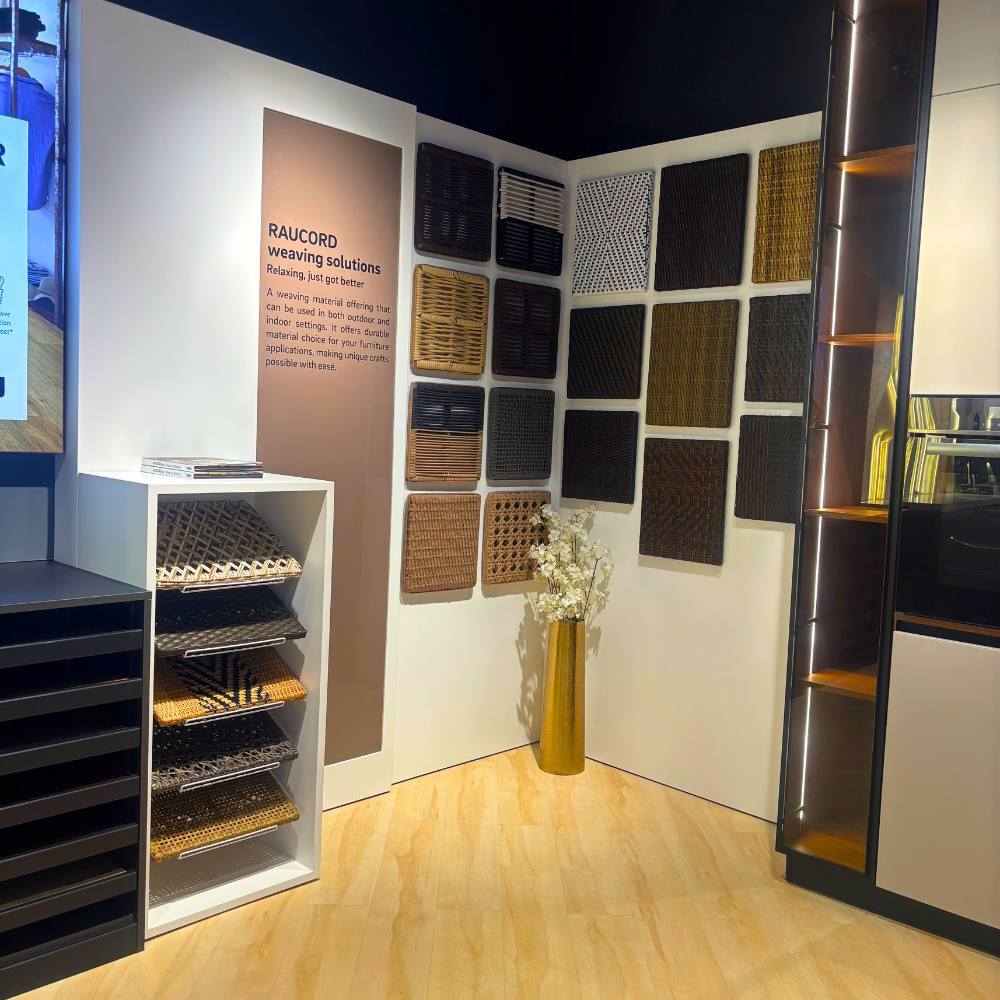
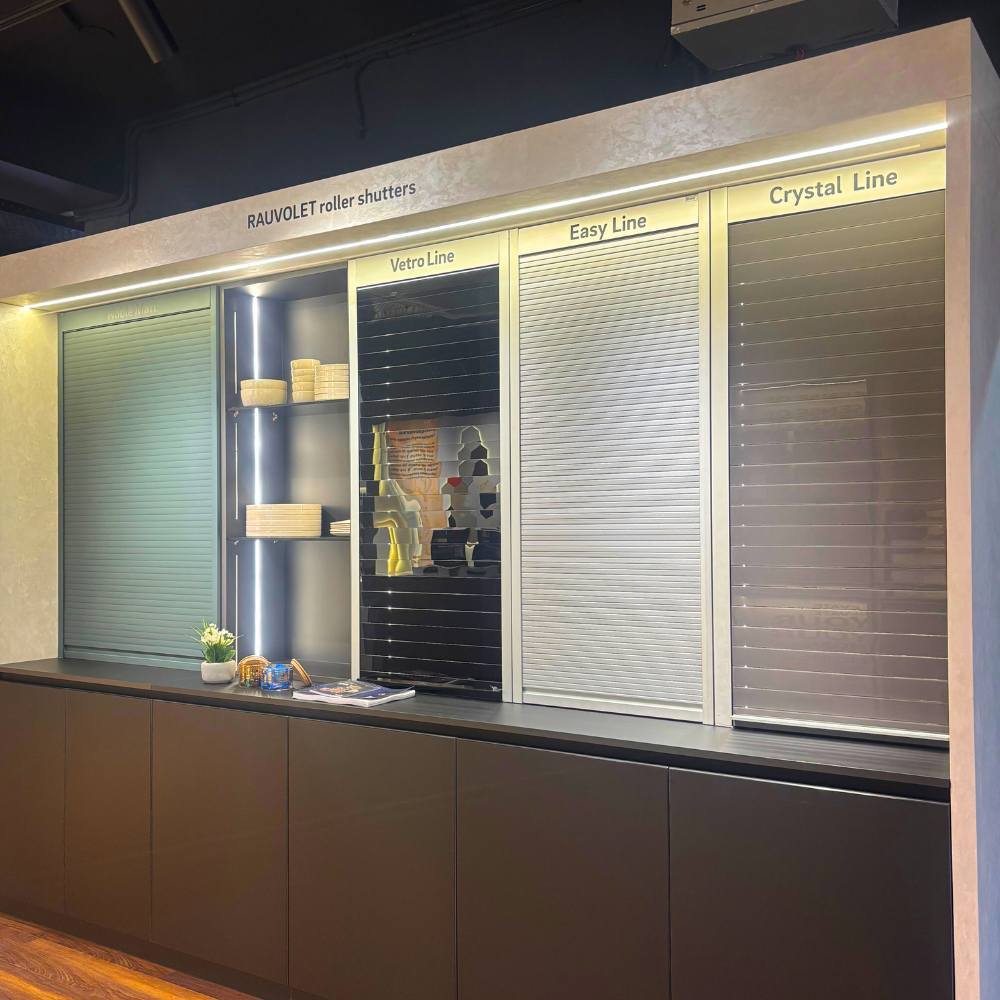
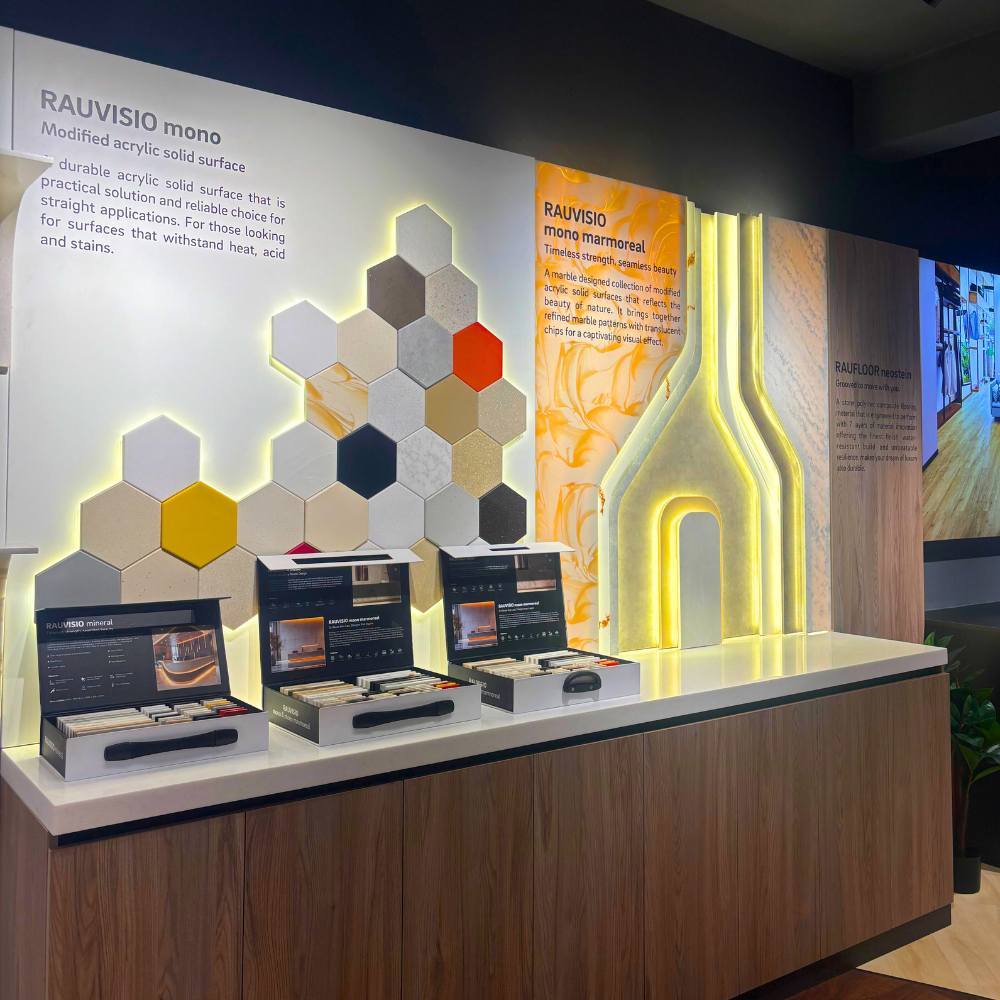
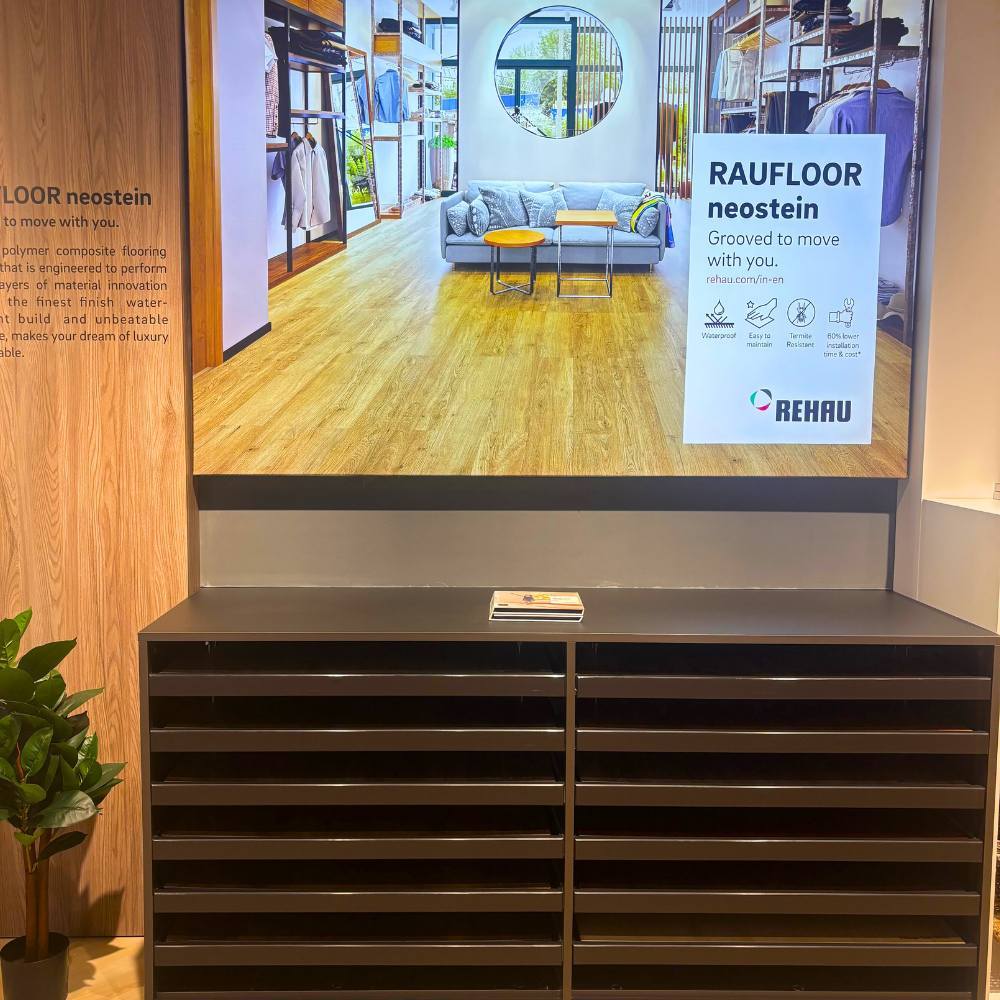
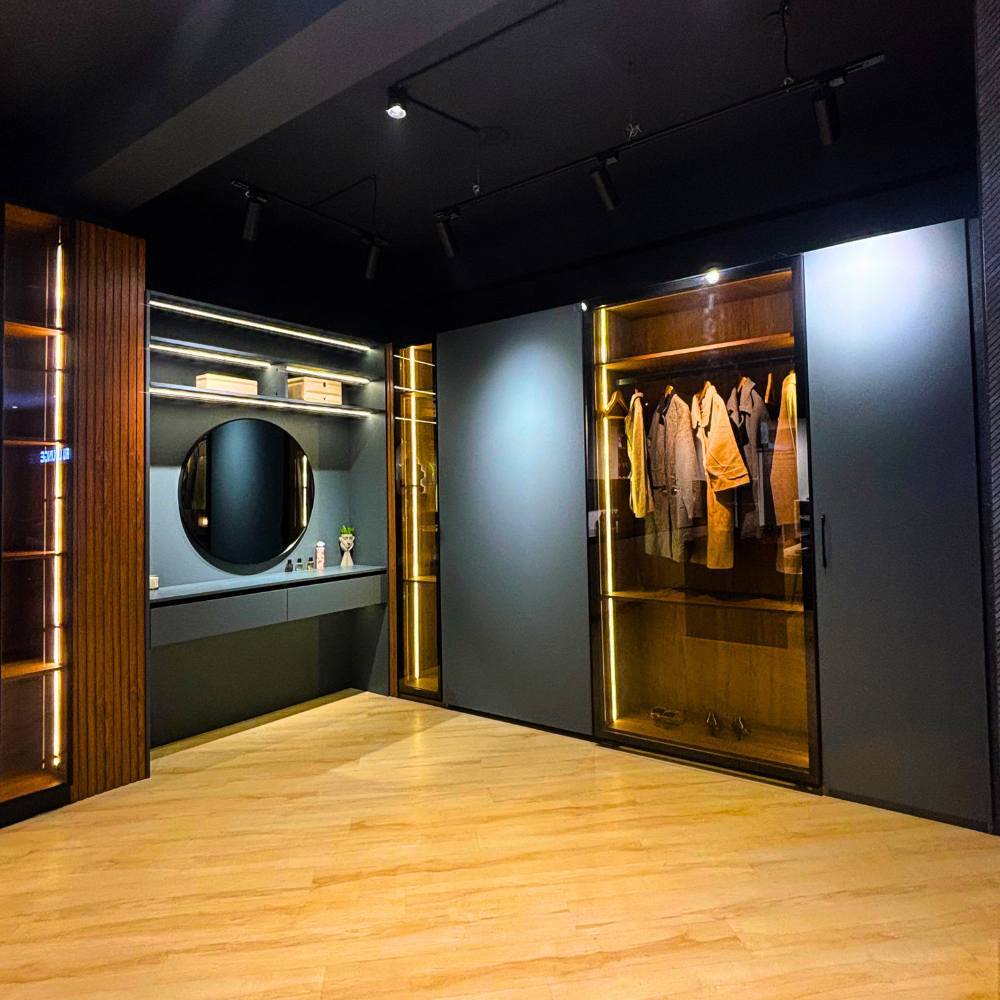
House of REHAU aims to transform the way edgebands and other components are presented. The company’s first 2,000-sq-ft experience centre showcases all its nine product
categories and serves as a key touchpoint for partners, architects, designers, and consumers. Verma shared that REHAU will establish 100 such touchpoints over the next three years, prioritising the top 8, 16, and then 32 cities. This will include smaller ‘studios’
(1,000–1,500 sq ft) and ‘shop-in-shops’ developed in partnership with dealers who
understand the products.
“Traditionally, we have been a B2B supplier, but now we are moving towards a B2B2C model. The intent is not retail expansion in the conventional sense, but channel transformation.”
“A ‘furniture powered by REHAU’ message will work only if the consumer understands what
the brand stands for,” Verma said. By building brand awareness at the consumer level, the
company aims to make it easier for manufacturers to justify upgrades and premium positioning.
Edgebands Plus
Edgebands play a vital role in furniture performance. While they form a small part of the finished product, they protect boards from moisture, improve impact resistance, and define
visual finish. Edgebands are also REHAU’s core business in India, accounting for over 65
percent of its revenues.
To strengthen its position in this segment, in October 2024 REHAU acquired a 51 percent
stake in Red Star Polymers, a Sri City–based manufacturer of PVC edgeband tapes. The move is meant to enables the company address the value and entry-level segments without
diluting its premium brand positioning.
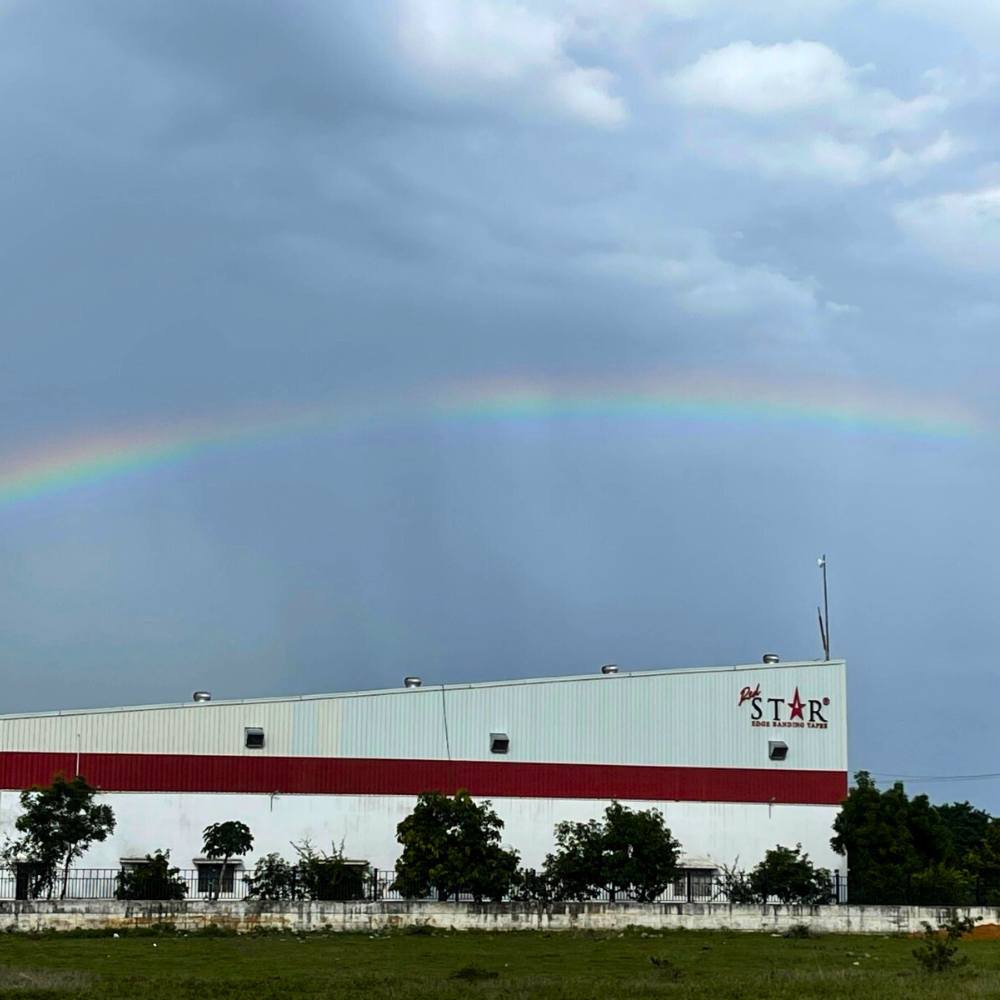
“The Red Star acquisition allows us to compete more effectively at the budget end of the
market while continuing to strengthen REHAU’s leadership in the premium segment,” Verma said. “Following the acquisition, the Sri City facility has undergone process upgrades
and automation, with capacity expanded by around 40 percent. This additional capacity is
coming on stream in early 2026.”
Red Star’s products, priced 30–35 percent lower than REHAU’s premium ranges, create a
clear portfolio separation. Customers demanding high customisation, design accuracy, and
material innovation remain within the REHAU portfolio, while Red Star competes directly
with price-led local players.
Beyond price positioning, REHAU’s differentiation increasingly lies in the depth and
customisation of its product portfolio. While Red Star operates as a pure PVC edgeband
offering with a limited 200-colour range, REHAU’s portfolio spans multiple material
technologies, including ABS, veneer-based wood edgebands and other specialised variants.
The premium portfolio offers significantly higher customisation, with over 1,200–1,500
shades and profiles compared to a few hundred options in the value segment.
Verma highlighted that REHAU’s technical capabilities extend to advanced features such as
embossed edgebands with tactile wood-grain finishes, as well as the ability to create both
vertical and horizontal grain orientations—technologies that allow closer alignment with
high-end laminates and surfaces. This level of precision, he noted, is critical for OEMs and
premium kitchen manufacturers seeking visual continuity and design accuracy.
Manufacturing Reset
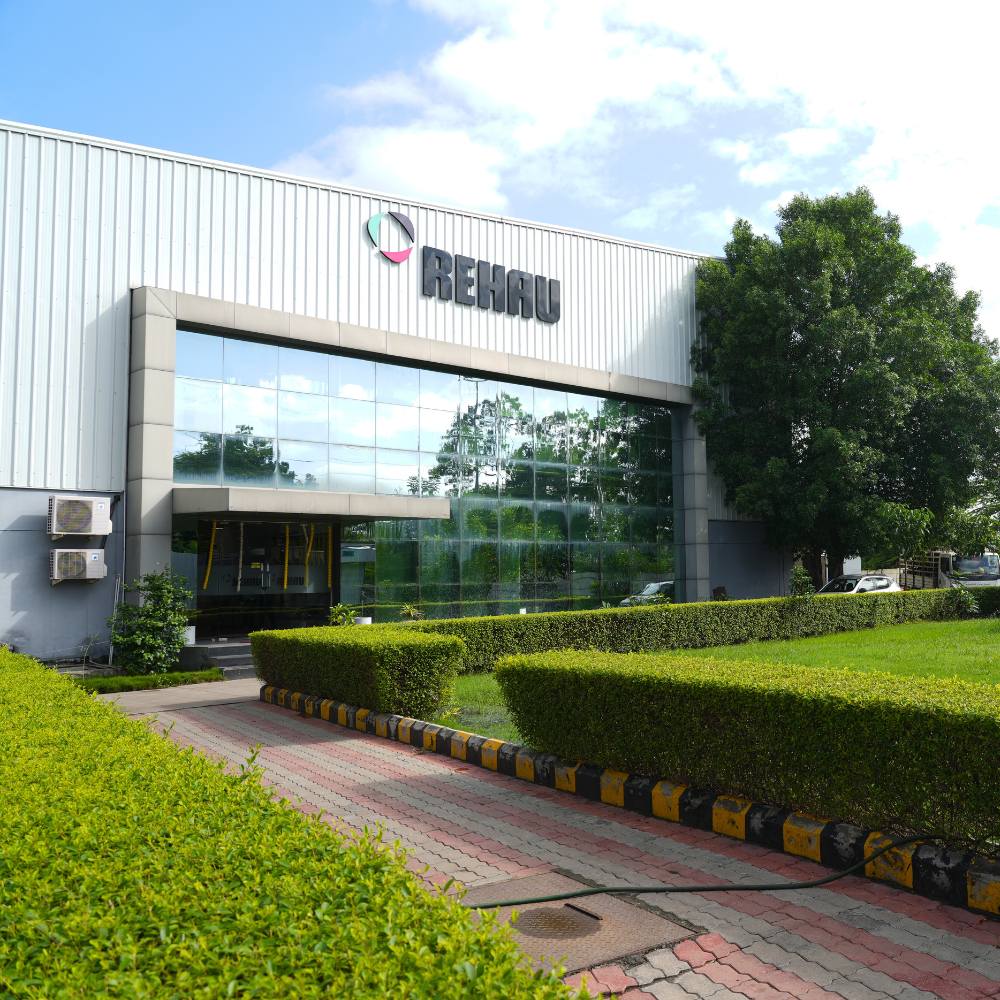
Another critical pillar of REHAU’s reset is its manufacturing strategy. “We have consolidated
our western Indian operations by shifting production from Pune to a single expanded facility in Vadodara, positioning it as our mother plant for extrusion and quality control,” Verma said. Manufacturing consolidation, he noted, is a critical pillar of the REHAU India strategy reset, allowing tighter control over quality, cost and responsiveness.
In parallel, the company has acquired 1.05 acres of industrial land adjacent to the Red Star
Polymers facility at Sri City, near Tirupati, Andhra Pradesh, for a greenfield plant expected to be operational in 2027–28. This will mark the next phase of REHAU’s manufacturing
expansion in India.
Verma clarified that this third plant will be flexible in nature, housing either REHAU premium lines, Red Star lines, or a mix of both, depending on how demand evolves across
segments—allowing manufacturing investments to track market realities rather than fixed
assumptions.
Where Materials Meet Manufacturing Discipline
As REHAU sharpens its focus on manufacturing capability and experience-led engagement,
kitchens and cabinetry increasingly act as a useful reference point for how the company
thinks about quality and execution. Verma explained that, more than most furniture
categories, kitchens bring multiple variables together—material performance, precision
manufacturing, surface compatibility, edge detailing, installation quality and long-term
service.
“In cabinetry and kitchens, small details make a disproportionate difference,” he said. “This
is where you see how materials behave over time—moisture resistance, edge integrity, finish consistency and colour matching.”
From REHAU’s perspective, this makes kitchens a practical lens for evaluating real-world
performance. By focusing on materials science and process discipline, the company believes it can help raise manufacturing benchmarks across the modular kitchen and furniture ecosystem.
Long-term Outlook
Despite near-term volatility, the REHAU India strategy reset is anchored in a long-term view of India’s furniture and building materials industry. Verma pointed out that, unlike many consumer-facing sectors, building materials has historically been a stable industry with few instances of business failures.
The pandemic, he added, marked an inflection point by accelerating consumer attention
toward home quality and aesthetics—a behavioural shift that is likely to persist even as
growth normalises. Against this backdrop, REHAU sees India as a structurally strong market where investments in manufacturing capability, portfolio depth and consumer awareness can compound over time.
With double-digit growth reported last year and a target CAGR of around 15 percent,
REHAU aims to double its India revenues over the next four to five years. The brand
currently clocks approximately ₹500 crore in annual turnover in India. It is positioning the
subcontinent not just as a sales market, but as a manufacturing and capability base within
its global network. Investments are being split between manufacturing capacity and market-facing initiatives—marking a shift from a production-only focus to a more balanced strategy. Verma said that capital expenditure plans include ₹50 crore already committed for retail expansion and ₹50–100 crore earmarked for future plant capacity expansions, depending on market demand.
“India’s demand fundamentals remain strong, driven by a young population and sustained
urbanisation. At REHAU, the focus today is less on scale and more on building capability,
sharpening positioning, and evolving with customers.”
ALSO READ