


India’s home interiors and kitchen market is reordering itself. As e-commerce, quick commerce and brick-and-mortar collide, the winning stores are no longer showrooms; they’re stages. Rethinking Retail: FRDC’s playbook for stores that make people feel something has been helping build those stages for nearly two decades. FRDC (Future Research Design Company) is a retail and experience design firm led by architect-designer Sanjay Agarwal.
From Transaction to Experience
Agarwal’s starting point is cultural memory as much as brand strategy. “Consumers don’t think in channels,” he says. “They want seamless service, fair value and a clear point of view.” That shift—visible well beyond metros—has pushed retailers in Tier-2 and 3 cities to rework layouts, lighting, adjacencies and service choreography. The brief is no longer ‘fit more SKUs’; it’s ‘design for discovery, trust and conversion’. That’s rethinking retail.
FRDC’s method for rethinking retail is research-first (ethnography, journey mapping, and documentation) and process-driven (repeatable design systems that scale across formats). Over 180 brands later—spanning kitchens, lifestyle, electronics and home décor—the common thread is stores that connect emotionally while still being operationally tight: faster planograms, modular fixtures, clearer sightlines, and staff flows that reduce friction.
Two Playbooks, One Idea: Make the Brand Tangible
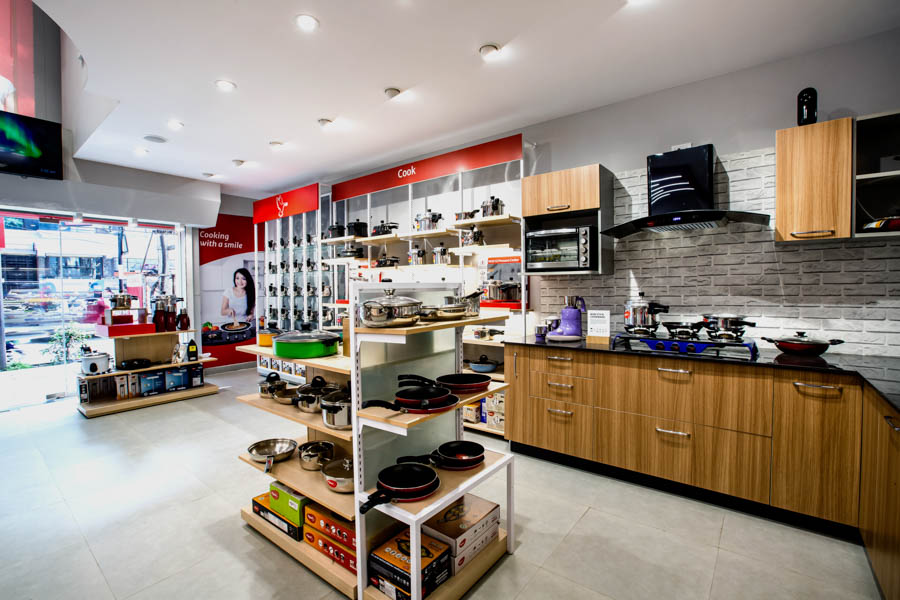
Pigeon Kitchen Appliance Store – small format, big recall. In compact footprints, FRDC leans into familiarity: white tiled façades that echo 80s–90s Indian kitchens, direct product storytelling, and benefits-led displays. It’s designed for broad appeal and sensible budgets, without sacrificing wayfinding or hero moments. This concept took silver in the Kitchen & Home Improvement Store Design Award 2025 at the India Kitchen Congress Awards—recognition for making a value format feel warm, legible and memorable.
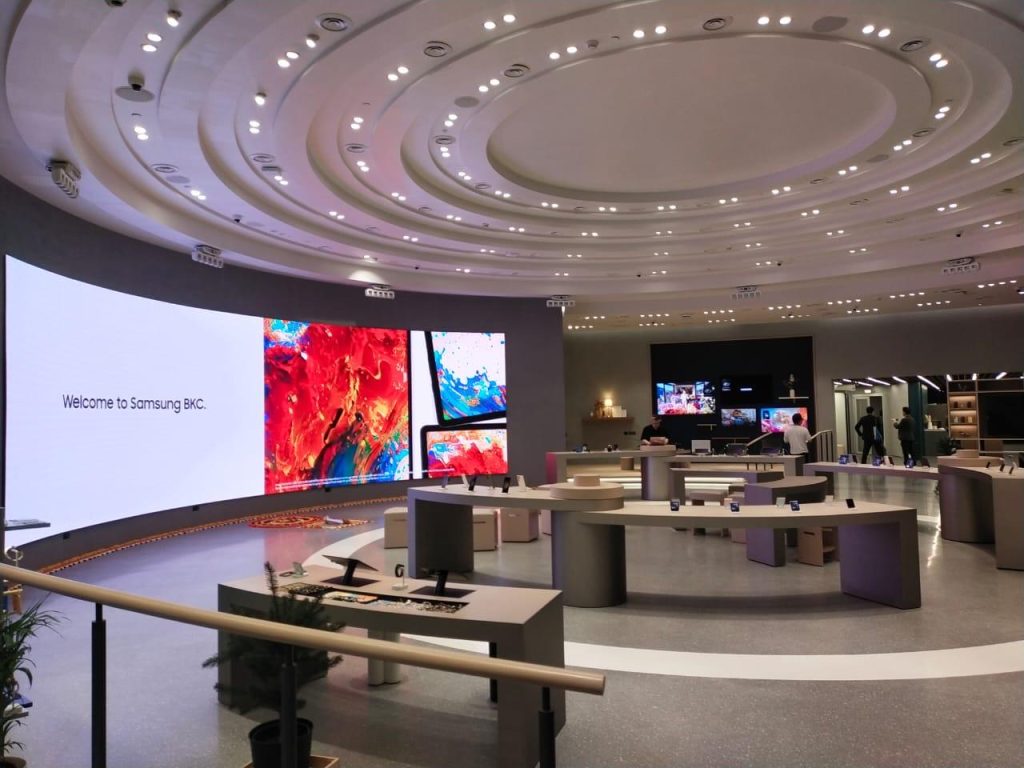
Samsung Lifestyle Experience Store – premium without the hard sell. At the luxury end, FRDC choreographs ‘try, don’t be sold to’ environments: live culinary showcases, gaming demos, immersive OLED moments—positioned beside luxury fashion without visual noise. It’s retail theatre tuned to high-intent audiences, where the brand’s ecosystem, not a single product, is the protagonist. The concept won silver in the Kitchen Shop-in-Shop Design Award 2025, underscoring how premium spaces can convert through narrative and participation rather than pitch.
What These Concepts Signal about India’s Retail Direction
Experience is the new shelf. Categories that are touch-heavy—kitchens, appliances, surfaces—win when the store lets people test, compare and imagine use in their homes.
Format bifurcation is real. India needs both: budget-smart neighbourhood stores with high clarity, and flagship experiences that create halo and content.
Design must travel. Scalable kits of parts—fixtures, lighting recipes, VM guidelines—let brands roll out consistently across cities and partners.
Service is part of the floor plan. Clear service choreography (demo, consult, checkout, installation scheduling) now matters as much as display.
Memory matters. Referencing local materials, textures, and rituals can make modern retail feel personal, not imported.
Awards are not the point, but they are a useful barometer: they validate that design can lift both sentiment and sales says Agarwal. “As kitchen retail, home interiors and furniture installations mature, FRDC’s stance is pragmatic—blend function with feeling, brand with behaviour, and keep the store honest about what it’s for: helping people make confident decisions and remember why they liked a brand in the first place.”
Watch Sanjay Agarwal explain FRDC’s retail design principles here.