


The global furniture industry faces a sustainability reckoning. With mounting pressure from climate-conscious consumers and regulatory bodies, manufacturers worldwide are scrambling to reinvent their operations. For Swedish furniture giant IKEA, sustainability is not a corporate buzzword—it is a core business philosophy; and IKEA’s sustainability initiative is India’s golden opportunity.
From recyclable products designed for disassembly and reuse, to responsible forest management and electric vehicles for commercial logistics, IKEA is pioneering a revolutionary approach to eco-manufacturing. Linn Roslund, managing director at IKEA Supply South Asia, highlights how India plays a pivotal role in IKEA’s sustainability goals.
IKEA’s ambitious environmental targets include halving its emissions by 2030 and achieving net zero status by 2050. This aligns with broader corporate trends: Deloitte’s 2024 CxO Sustainability Report shows that climate change is among top three issues for global C-suite level business leaders, with 85% of CxOs saying they have increased investments in sustainability in the past year.
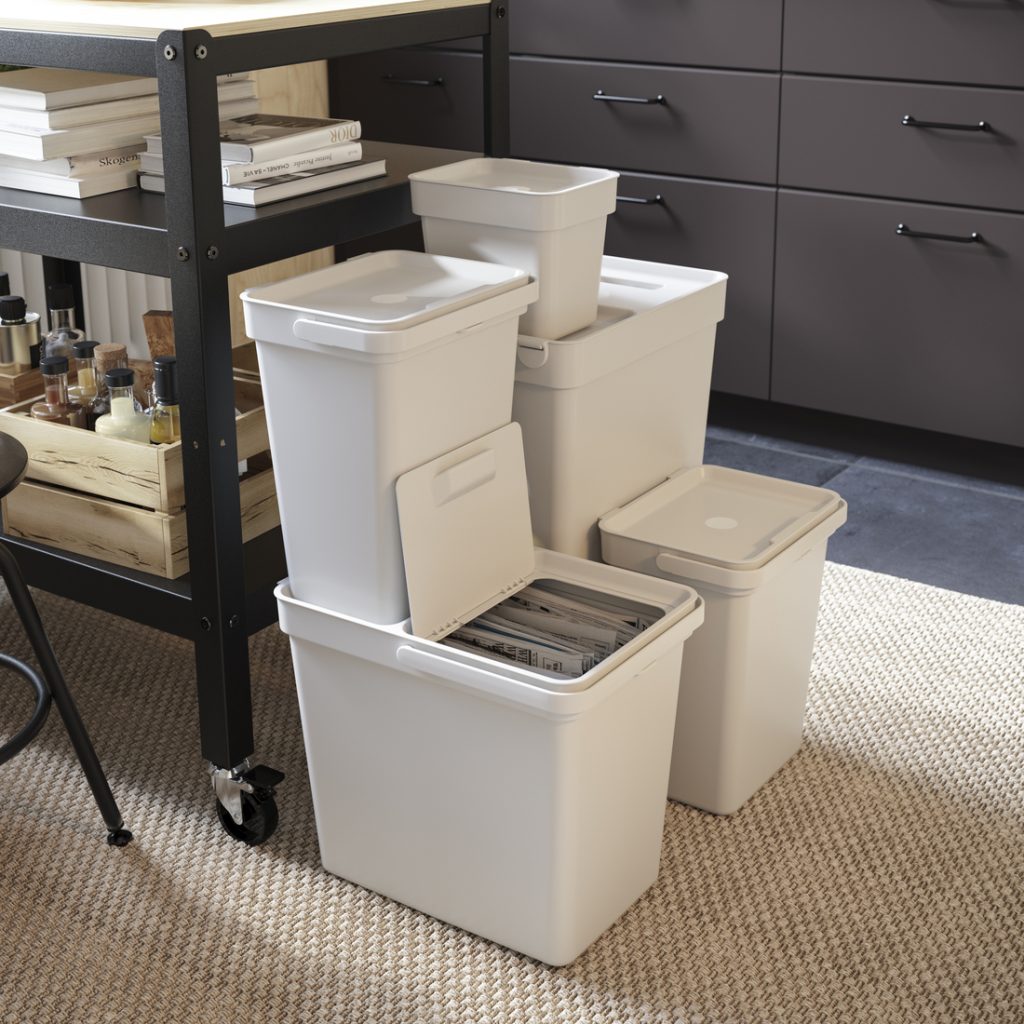
India serves as a key testing ground for IKEA’s sustainability initiative. For instance, the
HALLBAR waste bins produced in India utilise 50% recycled plastics by engaging an ecosystem of waste pickers, transformers, aggregators, and supply partners in the country. This tackles environmental concerns of plastic waste while reducing costs by 16%.
India also leads IKEA’s global logistics transformation through the EV truck program that has deployed the country’s first long-haul EV trucks for retail operations (in partnership with BLR Logistics Ltd), saving 160,000 kilometres annually, reducing both emissions and costs. By the end of the year, IKEA India aims for 100% electric deliveries.
“India is a pioneer globally in sustainable transportation,” Roslund says, while also emphasising how Indian suppliers already operate on 70% renewable energy and continue to grow. Through strategies like these, the world’s largest furniture retailer challenges conventional belief that trades off sustainability for affordability.

The IKEA Revolution
At IKEA’s core lies its ‘Democratic Design’ philosophy, comprising form, function, quality, low price, and sustainability. Every product needs to fulfil all five—there can be no sacrificing one for the other.
This bolsters IKEA’s circular economy model. Circularity for IKEA means fundamentally
redesigning how products are conceived, created, and used throughout their entire lifecycle. Rather than the traditional linear model of take-make-waste, IKEA creates comprehensive ecosystems that generate value at every stage.
Its eucalyptus forest process exemplifies this approach: IKEA partners distribute seedlings to farmers, provide sustainable forest management training, and create markets where farmers sell mature wood back at fair prices for furniture production. Similarly, the INDIRA bedspreads use recycled production textiles with cotton blends designed for future recycling—Roslund has used hers since her teenage years, demonstrating its longevity.
For context, 97% of IKEA’s wood is FSC-certified or recycled, while ~55% of all materials sourced are renewable and ~17% recycled. IKEA takes responsibility for designing these circular ecosystems rather than placing the burden on consumers. IKEA’s sustainability initiative is supported via its extensive ecosystems that have replaced linear supply chains. The company builds end-to-end networks that foster innovation, collaboration, and knowledge transfer to convert pro-environmental practices into affordability.
IKEA India’s Strategic Role
India fits into this picture as IKEA’s global export hub. IKEA’s relationship with Indian suppliers already spans half a century, beginning with carpets and textiles that have evolved into a sophisticated network of partnerships which are, on average, 11 years long. This validates India’s potential as a global manufacturing base. Roslund reiterates this, saying “if a product is successful in India with Indian raw material, it will be successful everywhere.”
For small and medium enterprises, this represents a sizable opportunity. “The real heroes are the SMEs and the suppliers,” Roslund says. “At least a third of the suppliers we use in India are in that size,” noting many “started out as SMEs and are now considered to be larger businesses.” The transformation occurs through comprehensive support extending beyond purchasing.
Watch Linn Roslund’s intense 45-min conversation about IKEA’s sustainability initiatives here.
Crucially, IKEA does not demand exclusivity. Instead, it leverages learning as a path to success, enabling suppliers to build capabilities across multiple markets while contributing to IKEA’s innovation. In addition, IKEA’s strict requirements and verification processes create strong business ethics that are “good preconditions” for other customers.
Global market access represents another key advantage. All Indian suppliers get opportunities to supply global markets, as IKEA’s “low-cost production is fuelled by volume.” This global reach enables SMEs to achieve necessary scale for cost efficiency while meeting international standards.
Moreover, partnerships under IKEA’s sustainability initiative prioritise capability building over capital investment. The key differentiator lies in meeting IKEA’s sustainability and quality standards rather than having significant capital reserves. By focusing on operational excellence and adherence to the IWAY code of conduct rather than financial capacity, the furniture giant opens doors for smaller enterprises that demonstrate commitment to responsible manufacturing and IKEA’s
sustainability initiatives.
Past and Present Trailblazers
IKEA’s message is clear: sustainability isn’t a barrier but a pathway to competitive advantage which extends beyond environmental metrics to fundamental business model innovation. IKEA’s sustainability initiatives represent a fundamental reimagining of how global manufacturing can operate responsibly while remaining economically viable. “Setting long-term directions like that can look very frightening from the outside but it’s a way for us to lead our daily, yearly and strategic decisions towards that direction,” Roslund says.
India’s role as a testing ground for circular economy principles, sustainable logistics, and a
successful SME ecosystem positions the country as a blueprint for IKEA’s global plans. Indian manufacturers who wish to be a part of this transformation must focus on building robust quality systems, embrace sustainability as a business strategy rather than a compliance requirement, and prepare for long-term partnerships that prioritise innovation and mutual growth over short-term cost competition. IKEA sets the bar high, but for those who pass it, the rewards are not just profitable but transformational.