

India’s wood-panel industry, once dominated by conventional plywood, is now undergoing a quiet but seismic shift. Companies across India are betting big on eco-friendly panels such as particle boards (PB, also known as chipboard) and medium-density fibreboards (MDF), owing to their sustainability and cost efficiencies, while the plywood segment appears to be losing its stronghold. Among the companies leading this transformation is Merino Industries Ltd, which is redefining how sustainability and technology converge in modern furniture materials.
For Merino, a leading manufacturer and exporter of surface solutions since 1965, chipboard and marine board represent its latest effort to provide customers with products that are high-quality, affordable, and ethical. The company clocked revenues of ₹2,355 crore in FY25, with the laminates segment contributing to nearly 70% of its topline.
In 2024, Merino launched FABWood, ready-to-use prelaminated chipboard, positioned as a direct competitor to plywood. More recently it introduced marine boards as an alternative to conventional moisture-resistant green boards, combining German technology with 100% natural wood chips and superior resin systems.
These launches come at a time when India’s domestic demand for engineered eco-friendly panels is rising steadily, in line with global trends. A report from Mordor Intelligence on wood-based panel market growth (2025–2030) states that MDF demand is expected to grow at 4.29% CAGR, outpacing all other wood-based panel segments.
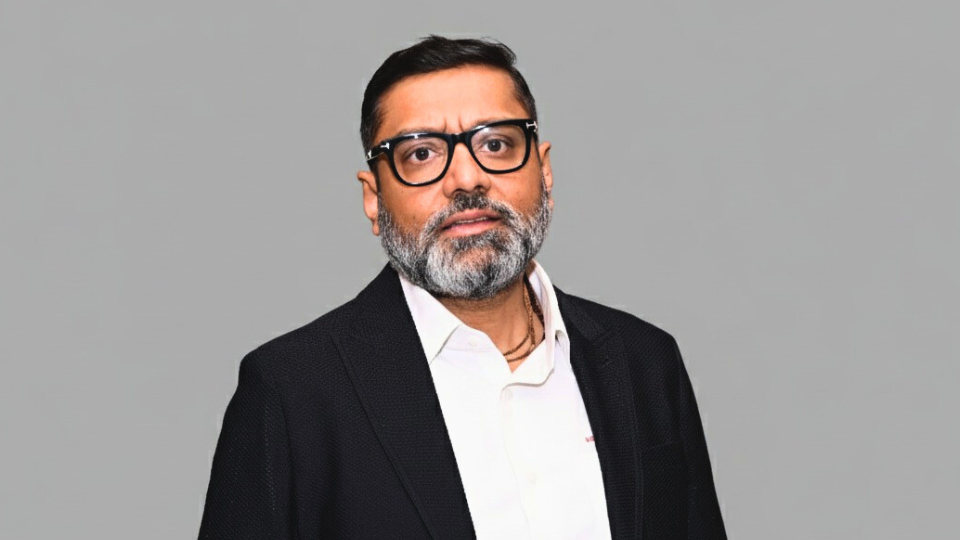
“India can’t remain insulated forever from what is happening globally,” says Manoj Lohia, director of sales & marketing at Merino, with quiet conviction. “With the recent changes, climate concerns, and growing awareness, people want more and more eco-friendly products.”
A Virtuous Loop
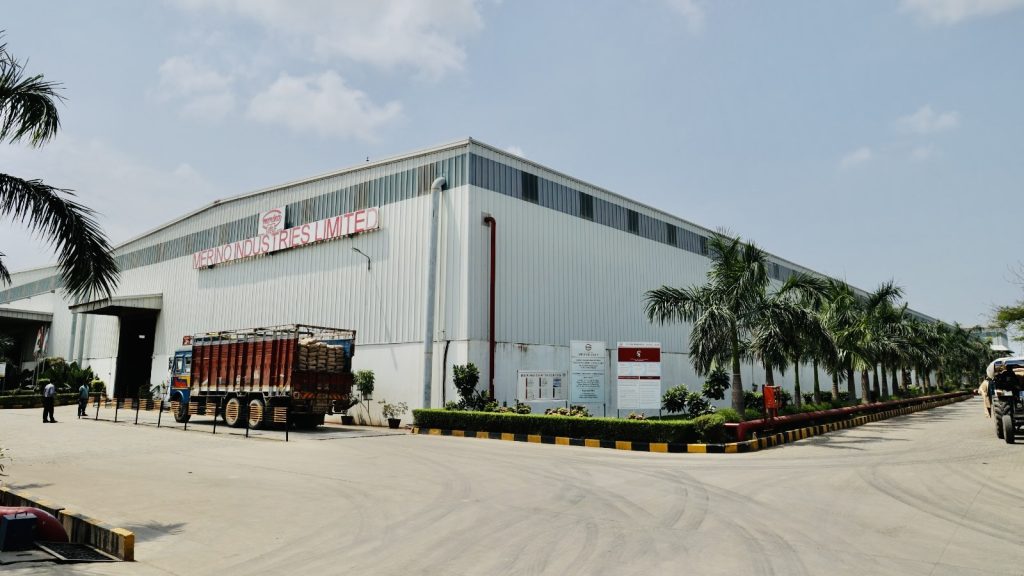
To meet this vision, Merino set up a manufacturing facility at Halol, Gujarat in 2023 with an investment of ₹850–₹930 crore. Much of the capex has been allocated to state-of-the-art machinery imported from across Europe, while land accounts for under 15% of the spend. The plant leverages Industry 4.0 automation and German technology to produce over 330,000 cubic metres of chipboard annually, including pre-laminated FABWood and high-performance marine boards.
Merino is pioneering a virtuous loop of sustainability, where every part of the production cycle—from plantation to panel—feeds back into environmental and economic renewal. It runs its own nurseries, contract farms, and eucalyptus plantations, planting nearly eight crore saplings annually on more than 1,500 hectares in partnership with farmers—an initiative that merges environmental restoration with rural livelihoods.
Within the next five years, Lohia expects these plantations to supply 100% of the raw material for Merino’s chipboard and engineered panels, offering a blueprint for sustainable manufacturing in India.
Complementing this is a 28 MW waste-to-energy plant that converts wood chips, sawdust, and agro-waste into renewable energy—turning what was once waste into the power source for India’s greenest board facility.
Merino’s foray into eco-friendly panels mirrors the broader strategy that many top manufacturers in India are pursuing. Greenply Industries, a leading plywood and MDF manufacturer, has ramped up capacity in its Vadodara MDF plant by 25% to 1,000 cubic metres per day as of September 2025. Meanwhile, Century Plyboards announced a ₹600 crore investment in July 2025 to establish India’s largest particle board facility near Chennai, with a capacity of 800 cubic metres per day.
At the Core of Business
Merino is positioning sustainability as a core business strength, not an add-on. All its chipboard panels are fully recyclable and certified to E1 emission standards, ensuring minimal formaldehyde release. Marine boards also have low-formaldehyde composition, superior screw-holding capability, and resistance to termites and borers, with higher moisture resistance than conventional green boards and warp-free performance even under boiling water.
By aligning with global sustainability benchmarks, Merino is setting a new standard for Indian manufacturers. While European markets are integrating 40–60% recycled content into chipboard and engineered panels, Merino is actively pursuing similar pathways—bridging the gap between Indian manufacturing and global best practices.
Swedish retailer IKEA offers a glimpse into how sustainability and eco-friendly practices can drive success. Much like Merino’s closed-loop system, IKEA has embedded circularity at the core of its operations to be both sustainable and cost-effective. Merino targets achieving a top line of ₹750 crore from its chipboard and marine board business by 2030.
Lohia believes that most cabinetry—such as kitchen cabinets, desks, and wardrobes—does not actually require resource-intensive plywood. Even in areas where plywood has an advantage, namely structural strength, it is often over-engineered for everyday use. For instance, a typical shelf for storing clothes in India can support up to 50 kilos, while the actual load rarely exceeds five kilos.
“We are over-engineering and paying more. Plywood is much more expensive today than chipboard and other engineered panels, and it puts a strain on natural resources unlike the others,” he asserts. Industry reports corroborate this—as per Prabhudas Lilladher’s sector analysis, MDF is 30–35% cheaper than plywood and only 5–10% more expensive than the cheapest plywood in the Indian market.
Standards Raising the Bar
Further shaping the panel industry are government regulations that have mandated BIS certification for several raw materials, besides many categories of panel furniture for which compliance will become mandatory from February 2026.
From an industry perspective, BIS compliance is likely to create disruption and accelerate consolidation, Lohia says. Smaller panel manufacturers lacking the capacity, technological infrastructure, or certification-readiness may either exit the market or be acquired, creating opportunities for organised, forward-looking players.
Coupled with environmental and licensing pressures, the benefits of switching to eco-friendly panels—like Merino has—seem to be the way forward. A market report from Equirus Securities demonstrates that such changes are already visible in the Indian wood-panel industry following the regulations. In the first half of FY26, MDF imports fell 71% in value and 35% in volume, while plywood imports dropped nearly 60%, according to the report. Non-certified panels from Thailand, Vietnam, and other low-cost markets were squeezed out.
“Introduction of BIS standards and continued strict implementation of QCOs (Quality Control Order) for wood-based panels across various sub-segments is giving optimism to organised brands that they would be able to gradually gain market share from the unorganised segment,” wrote Pranav Mehta, associate director of Equity Research at Equirus Securities, in a market report.
Industry leaders have also endorsed the new regulations for the furniture industry, with FIPPI president Rajesh Mittal calling it “a welcome step” that will help increase capacity and testing infrastructure to stabilise prices while ensuring quality and sustainability. For companies like Merino that have operated within certified processes for decades, the regulatory mandates are a positive move.
Towards a Sustainable Future
As the landscape of the wood-panel industry evolves towards one where sustainability and quality are inseparable from competitiveness, players with scale, technology, and environment-friendly supply chains will thrive. Among them, Merino and Lohia stand out for demonstrating that environmental stewardship and profitability can co-exist. Their blend of technology, design, and ecological responsibility signals the next chapter of India’s furniture industry—one driven not just by scale, but by conscience.
ALSO READ