

The DesignCafe channel offer and store-led growth strategy is shaping how the organised home interiors market in India is scaling beyond experimentation and into disciplined expansion. With a ₹360 crore order-book run rate, improving profitability and an aggressive franchise-led store rollout, DesignCafe is positioning its channel model around kitchens, wardrobes and geographic scale rather than discount-led growth.
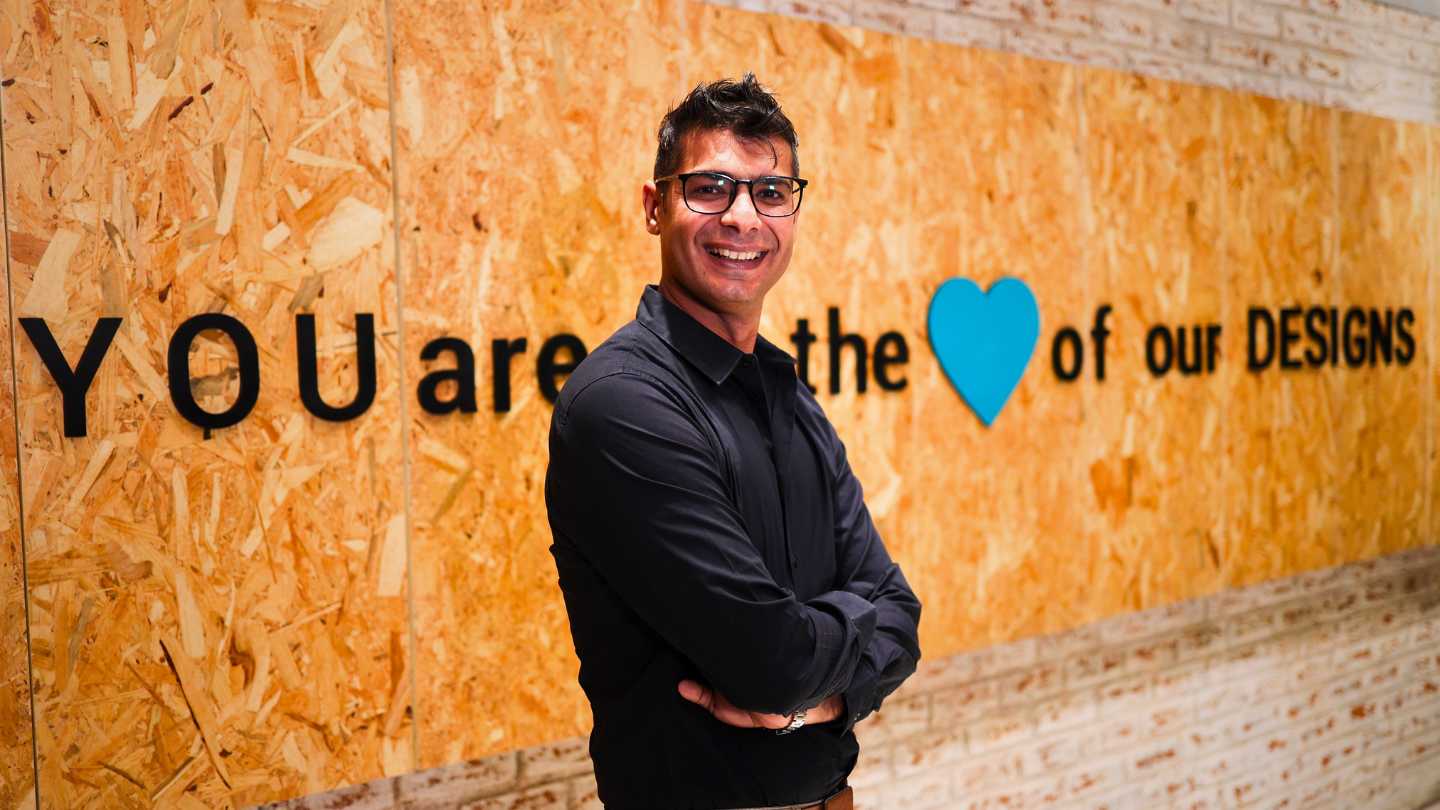
In a conversation with Sourcing Hardware, Shezaan Bhojani, Co-founder of DesignCafe, argued that the next phase of the organised interiors business will be driven not by marketing aggression or discounting, but by a carefully designed store-led channel model, anchored in kitchens and wardrobes and governed by tighter fiscal discipline—much of it shaped by investor expectations in a funded category.
DesignCafe is currently operating at a ₹360 crore order-book (OB) run rate, a 40% year-on-year increase, and has been cash-flow positive since December 2025. Profitability at the EBITDA level, Bhojani explained, tends to follow cash-flow improvements in interiors because revenue can only be recognised after project completion, while customer payments are collected earlier. “In our business, cash-flow positivity comes first and EBITDA comes later,” he said, describing the model as structurally negative working capital.
But beyond quarterly performance, Bhojani’s larger thesis was about distribution at scale, and why the DesignCafe channel offer—franchisee-owned, company-operated (FOCO) stores—is designed for a market that is still overwhelmingly unorganised.

Kitchens and Wardrobes: the Economic Anchor of Interiors
A critical reality of the interiors business is where customer spend actually concentrates. Bhojani said kitchens and wardrobes account for roughly 60–65% of DesignCafe’s revenues, a share that is broadly representative of the industry.
These categories dominate because they are:
- the most expensive components of interior woodwork
- highly storage-intensive
- well-suited to modular design and factory production
At present, Bhojani estimates around 90% of DesignCafe’s revenue comes from modular woodwork, with the remaining ~10% from add-ons such as false ceilings, lighting, wallpaper, countertops and appliances. That mix is expected to evolve. As DesignCafe has begun offering countertops, sinks, chimneys, hobs and appliances, Bhojani expects the non-woodwork share to move toward 20–25%—not by creating new demand, but by capturing spend that already exists within the same customer journey.
This concentration around kitchens and wardrobes explains why organised players obsess over factory control, catalogue discipline and execution predictability—and why physical stores remain central to scaling the business.
Why Scale in Interiors is Ultimately About Stores
For Bhojani, interiors is not a business where scale can be bought cheaply through price-led growth. “Scale-up happens in our business only by more stores,” he said, adding that margins are already too tight to allow sustained discounting.
DesignCafe currently operates 21 stores and plans to add 11 more, targeting 32 stores by August 15. The immediate pipeline includes Gandhinagar (this month), Surat (in a couple of months) and another Mumbai location, alongside discussions in Ranchi, Lucknow, Nagpur, Guwahati, Chandigarh, Kochi and Jaipur.
The ambition, however, goes further. Bhojani believes the DesignCafe channel offer can eventually support 200–300 stores, with 100 stores being a realistic medium-term milestone. His logic is geographic as much as demographic. Large Indian metros behave like multiple micro-markets: “Bombay is probably 10 cities in one…NCR is probably 10 cities in one,” he said, arguing that multiple high-performing locations within a city are not only possible but necessary.
He placed India’s trajectory in a global context. In China, organised interior brands such as Oppein built store networks running into the thousands. India, Bhojani argued, is 20–25 years behind China on indicators like GDP per capita and consumption maturity. “It’s a journey every country takes. In 2040, this will look very different,” he said.
The macro context matters: organised interiors still account for only 7–8% of the Indian market, leaving 92% unorganised. In that light, Bhojani sees room for multiple scaled platforms, even as competition intensifies.
The Channel Offer: FOCO Economics for Disciplined Expansion
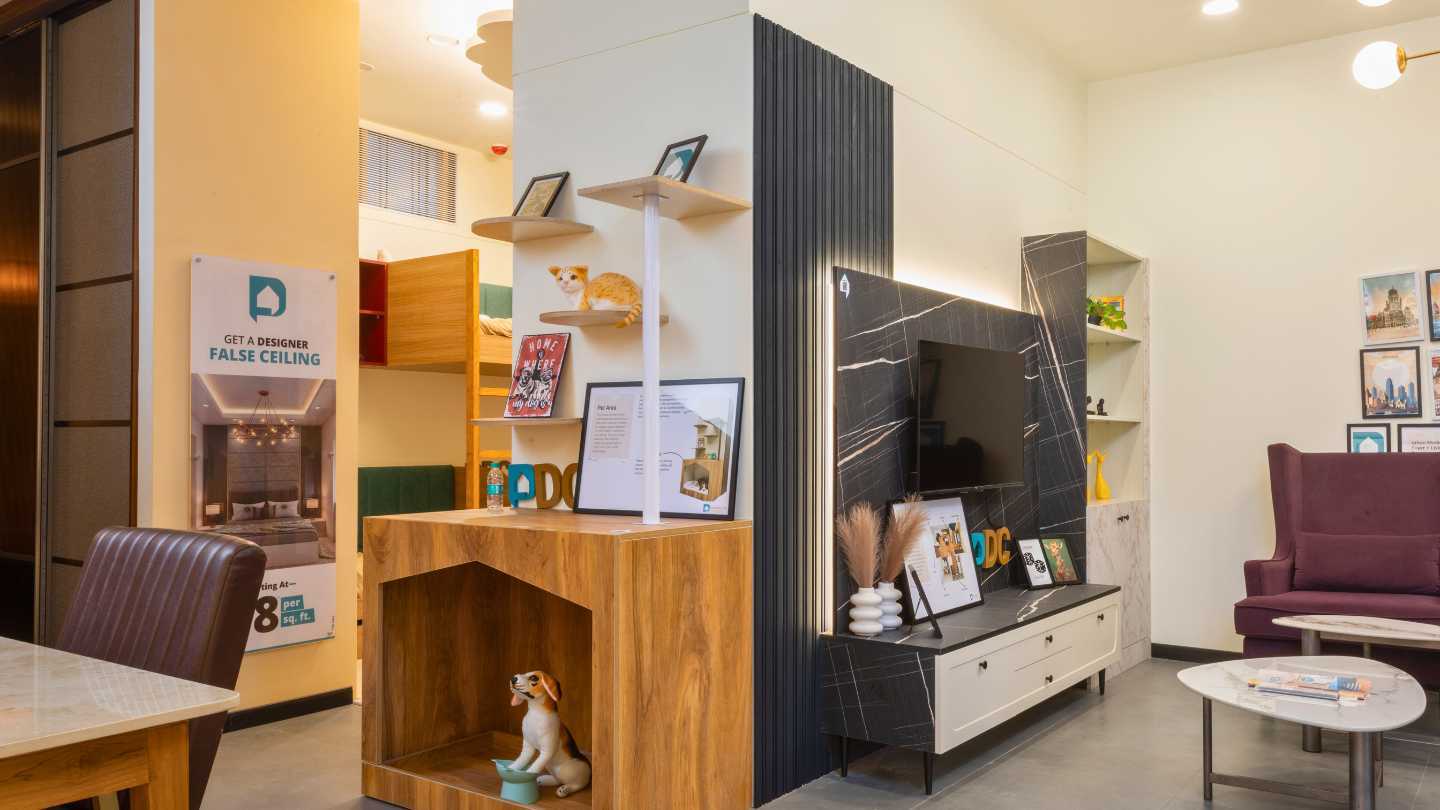
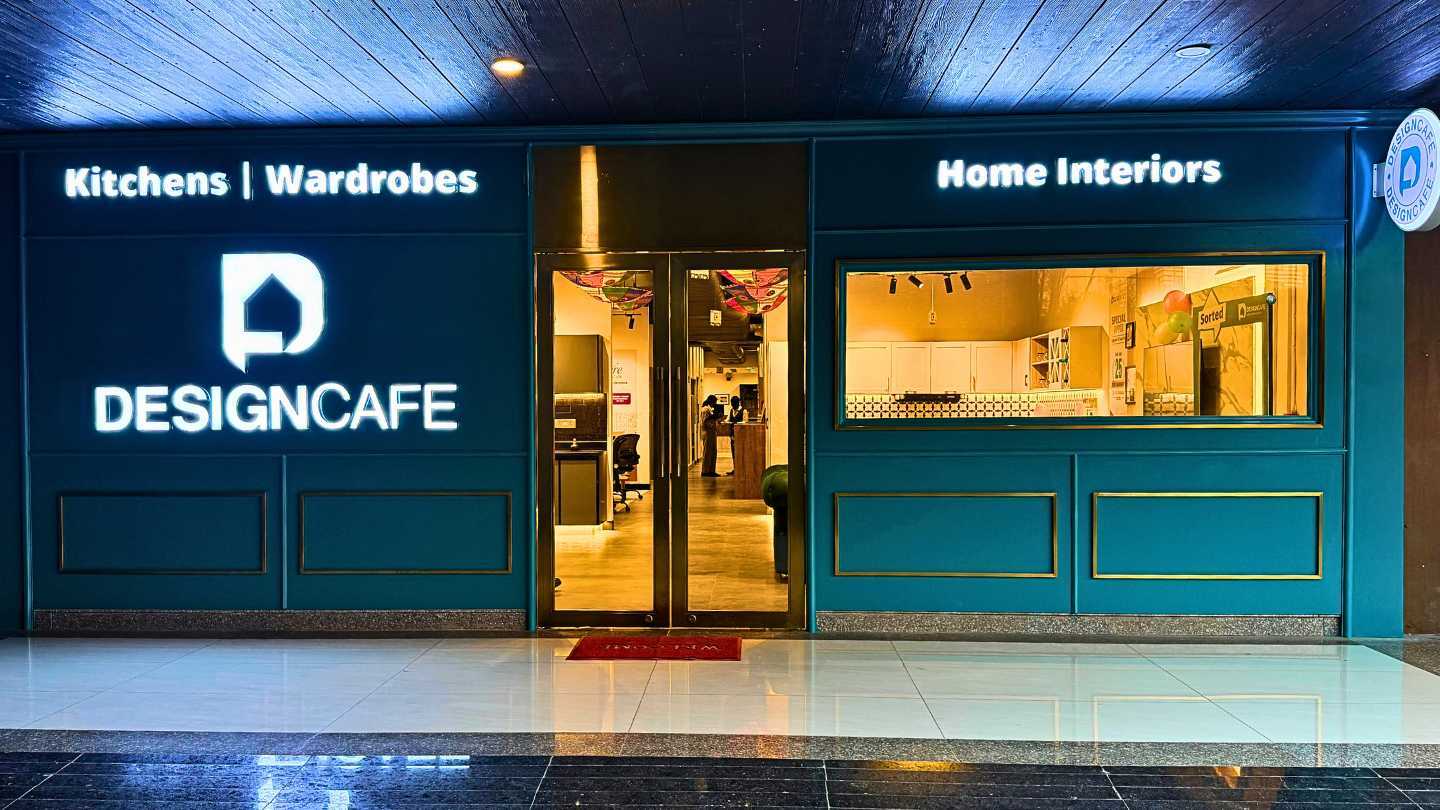
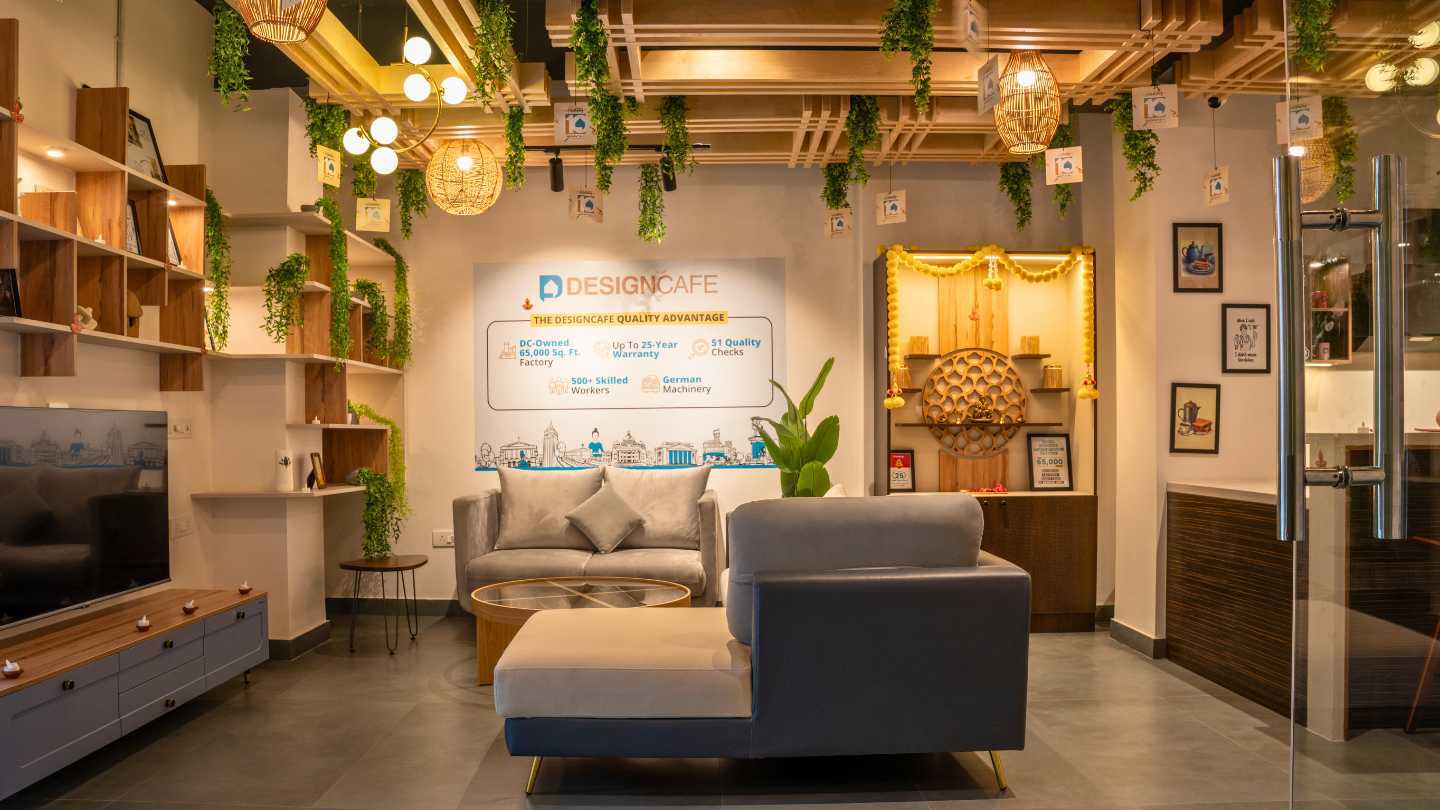
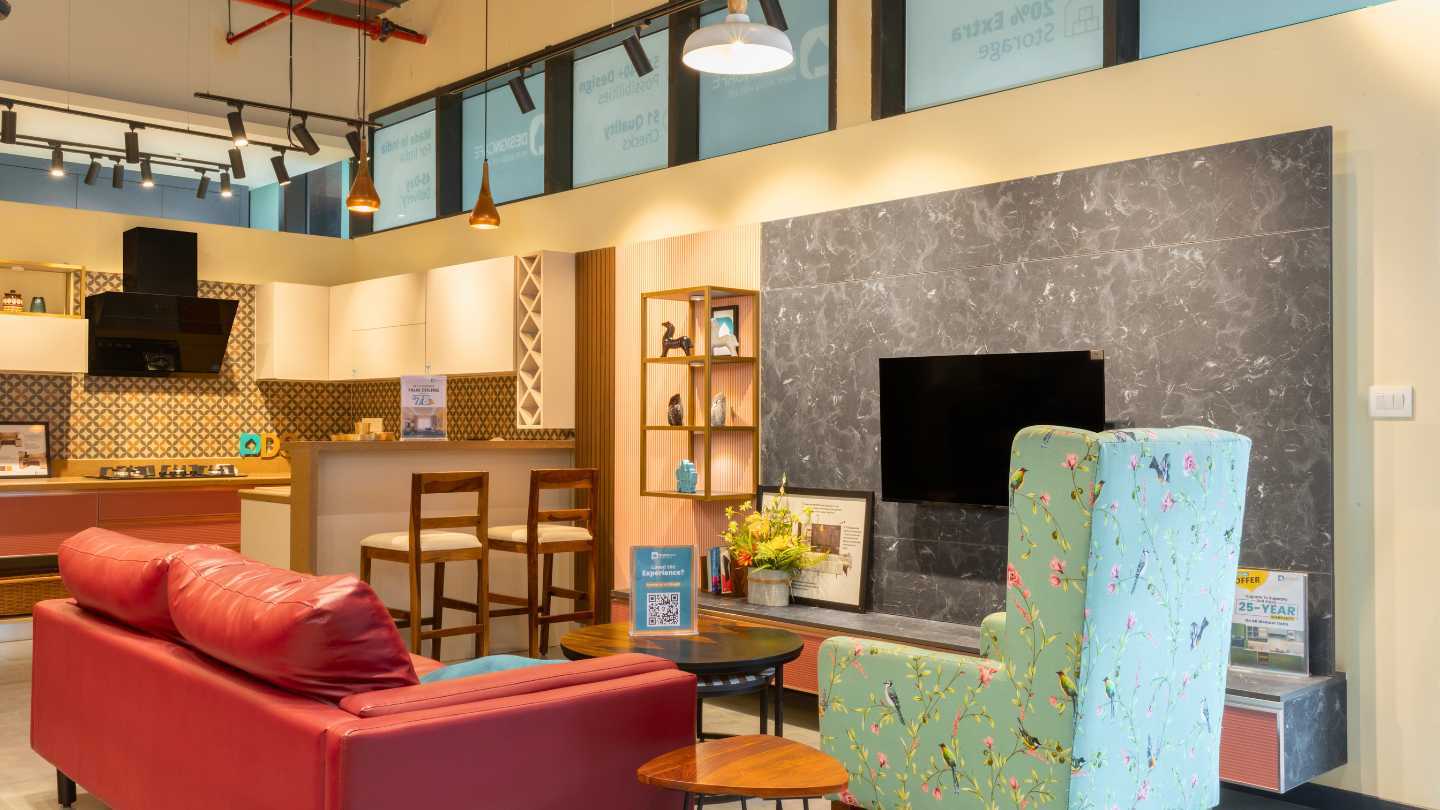
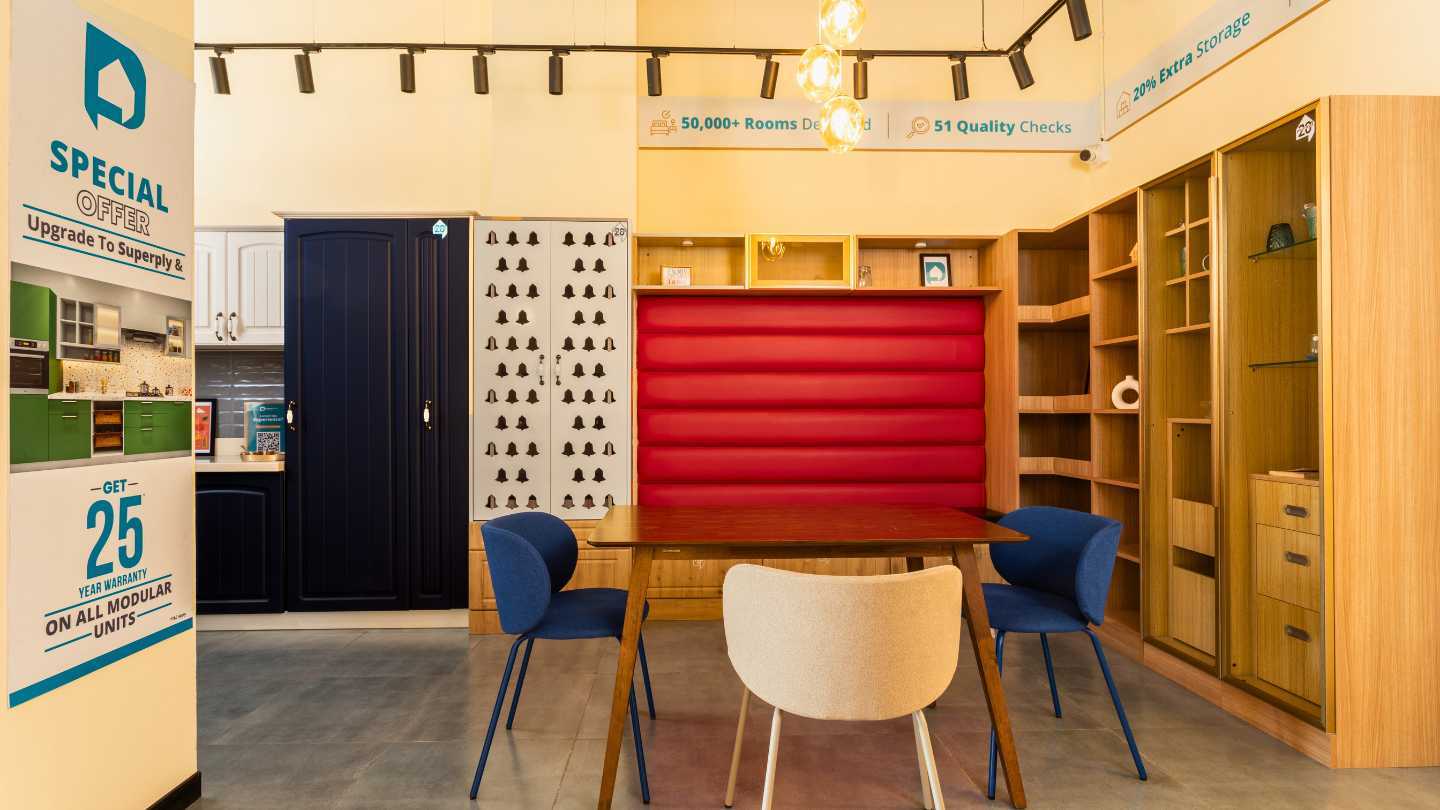
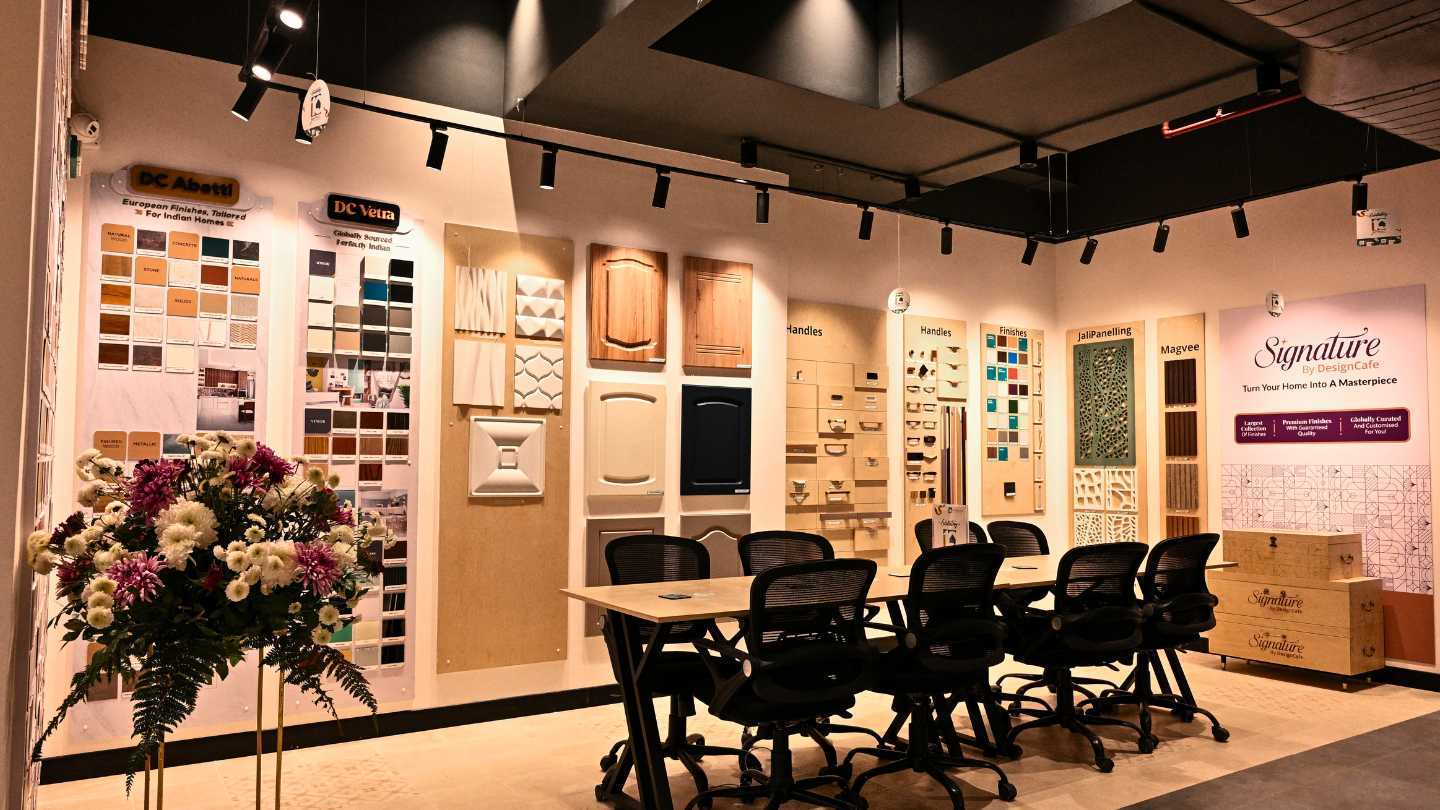
DesignCafe’s response to this opportunity is a franchisee-owned, company-operated channel model designed to keep capital requirements low at the front end while preserving execution control.
Under this model:
- Stores are franchisee-owned
- DesignCafe runs operations end-to-end
- Typical store size is 2,000–3,000 sq ft
- Capex is roughly ₹1 crore (± ₹10–20 lakh), excluding property purchase
The franchisee’s ongoing exposure is largely limited to rent, while DesignCafe manages staffing, design, sales, execution and delivery. Bhojani described it as “a very easy program for a franchisee.”
The DesignCafe channel offer financial claims are bold: operational break-even by the third or fourth month, payback in under two years, and about 35% annual ROI thereafter. Some partners already operate multiple stores, though Bhojani said the company prefers to widen participation rather than concentrate growth with a few investors.
At a projected ₹500 crore OB run rate across roughly 32 stores, Bhojani estimates annual throughput of ₹18–20 crore per store—a level he believes comfortably justifies showroom economics.
The Engine Behind the Stores: Funnel Depth and Backend Control
A FOCO model only works if demand generation and execution are both reliable. Bhojani shared scale math that illustrates the depth of the funnel required.
At a ₹360 crore OB run rate, with an average ticket size of around ₹9 lakh, DesignCafe serves roughly 4,000 customers annually, or 330 orders per month. To close about 12 orders a day, the system must engage nearly four times that number daily, and generate leads at nearly ten times that volume.
DesignCafe’s confidence in this engine rests on a maturing marketing system, including a strong organic presence—its YouTube channel has over one million subscribers—and a referral loop that now contributes ~30% of business. As stores mature, same-store growth improves throughput and lowers effective acquisition costs.
Rebuilding Unit Economics to Satisfy Investors
Importantly, Bhojani framed recent profitability not as an endpoint, but as validation for investors in a heavily funded category. “Profitability is important,” he said, “but the bigger question is scale.” Drawing parallels with venture-backed companies such as Zomato, Swiggy, Uber and Amazon, he argued that scale and profitability are sequential, not simultaneous.
For DesignCafe, reaching cash-flow positivity and brand-level profitability helps answer a critical investor question: Is this a viable business model? The next question, he said, is whether it can be scaled to ₹1,000 crore-plus per brand. “The expectation now is scale—can we make it a thousand-crore business?” Bhojani said.
He emphasised that margins in interiors leave little room for experimentation. “We don’t have Google or Facebook margins,” he said. “We can’t do business at a loss.” For investors, this means growth must come from geographic expansion and throughput, not margin compromise.
This investor lens also explains DesignCafe’s focus on tightening unit economics
since 2022. Bhojani cited:
- Premiumisation of product mix
- Improved designer productivity through technology
- CAC reduction from 12–13% to about 6%
- Procurement synergies post-HomeLane merger, improving costs by 100–200 basis points
One of the most impactful changes was vertical integration of premium components. By bringing aluminium, glass, mirror and duco production in-house, DesignCafe saved “at least 20%” on conversion costs. With roughly 30% of orders using these components, Bhojani estimates this translated into a ~6% reduction in procurement, without increasing prices.
Execution reliability further protects margins. Bhojani described a factory system with QR-code traceability, ensuring no project leaves incomplete, and improvements that reduced material wastage from ~21% to ~11–12%—critical in a margin-sensitive business.
What this Means for the Industry
The DesignCafe channel offer reflects a broader shift in organised interiors: stores, kitchens and disciplined scale are emerging as the real moat. If the company can expand from 21 to 32 stores while preserving unit economics—and eventually move toward a 100+ store network—it will offer a credible template for scaling a business that has historically struggled to grow without breaking.
DesignCafe’s current operating discipline also needs to be seen in the context of its 2024 merger with HomeLane, which brought together two of India’s most scaled interior platforms under a shared backend while retaining distinct brand propositions. The merger has sharpened industry focus on the economics of scale in home interiors—an issue that continues to challenge even well-funded players.
These questions around unit economics, execution predictability and long-term value creation will be taken up in greater detail by HomeLane co-founder Srikanth Iyer, who is scheduled to speak at the forthcoming India Kitchen Congress on “The Economics of Scale in Home Interiors: What It Really Takes to Build Trust, Predictability & Long-Term Value.”
For suppliers, manufacturers and channel partners, the signal is clear. As organised players scale through dense store networks, procurement consolidation, standardisation and execution reliability will increasingly determine who participates in India’s next phase of home interiors growth.
ALSO READ