

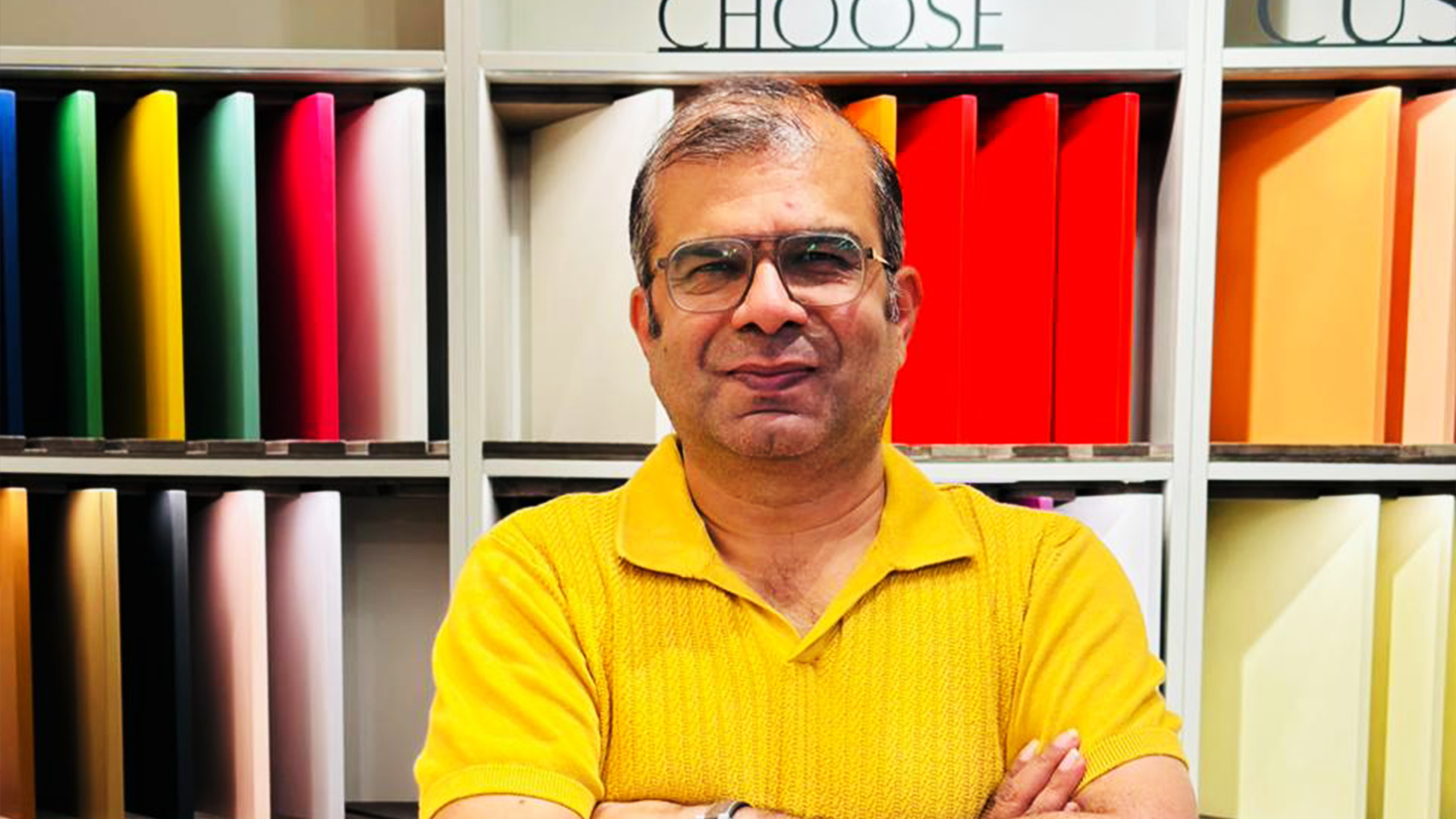
As India’s real estate sector expands and the concept of organised living takes root, homegrown furniture company Durian Industries Ltd is betting big on the modular space. Established in 1985, Durian entered the customised and modular furniture segment in 2024 to evolve into a complete home interiors brand. The company’s new business model—anchored in franchise-led retail—is positioning it to tap India’s fast-maturing modular market through the Durian modular furniture franchise network.
In an interview with Sourcing Hardware, Nilay Karambelkar, general manager at Durian, called this move “a natural progression” for a brand that has long defined quality furniture in India. A business leader with 27 years of experience in modular furniture and interiors, Karambelkar now leads Durian’s Full Home Customisation vertical, a 25-member unit responsible for design systems, QC frameworks, P2P processes, and franchise rollouts.
“Durian is an established name in the furniture market, selling sofas, dining tables and
beds. Next in line were kitchens, wardrobes and other cabinetry items. The modular space was a natural progression for Durian,” he said, adding, “Our founder envisioned it as a company offering a complete home interior solution.”
Riding the Real Estate Wave
India’s modular furniture industry has witnessed explosive growth, driven by urbanisation, compact housing and a desire for design-led living. According to Mordor Intelligence, the sector will grow steadily through 2030, closely tracking the real estate boom across metros and Tier-II cities. The World Bank expects India’s urban population to reach 40% by 2030, compared to 34% in 2020—an indicator of continued demand for residential interiors.
Durian’s modular plan, conceived in 2023, aligns squarely with this momentum. After a year of preparation in manufacturing, design and retail, the company launched its first three modular furniture studios in Mumbai (Goregaon), Delhi (Kirti Nagar) and Hyderabad. Seven more stores are expected by the end of this financial year, with a target of 20 outlets by FY 2026–27.



Building Through Franchises
Durian’s modular rollout combines company-owned and franchised outlets, with a eliberate push toward partner-led expansion in non-metro markets. “For Durian,franchisees are the ackbone of our retail journey,” said Karambelkar. “They are active participants who bring local insight and ownership.”
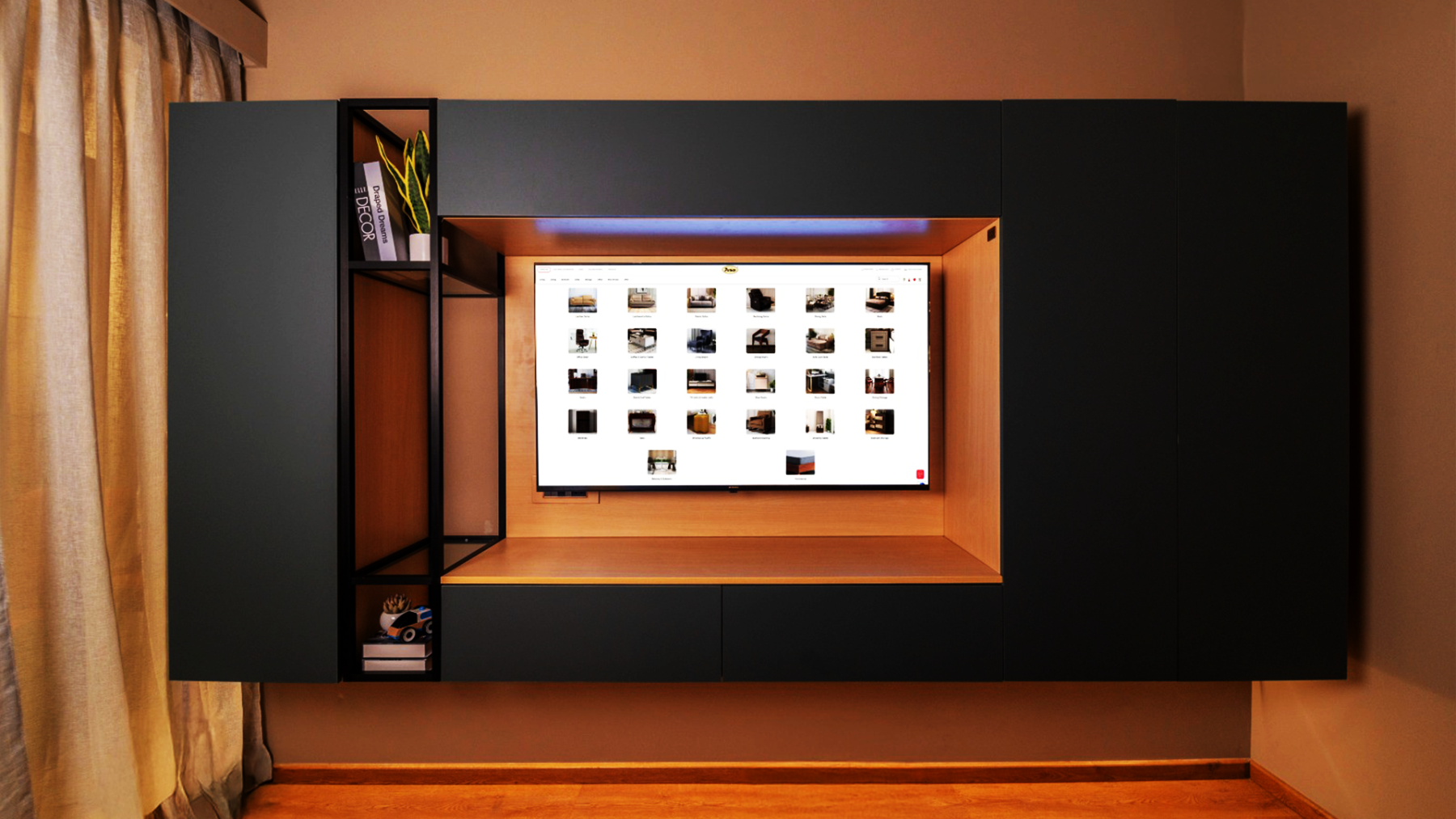
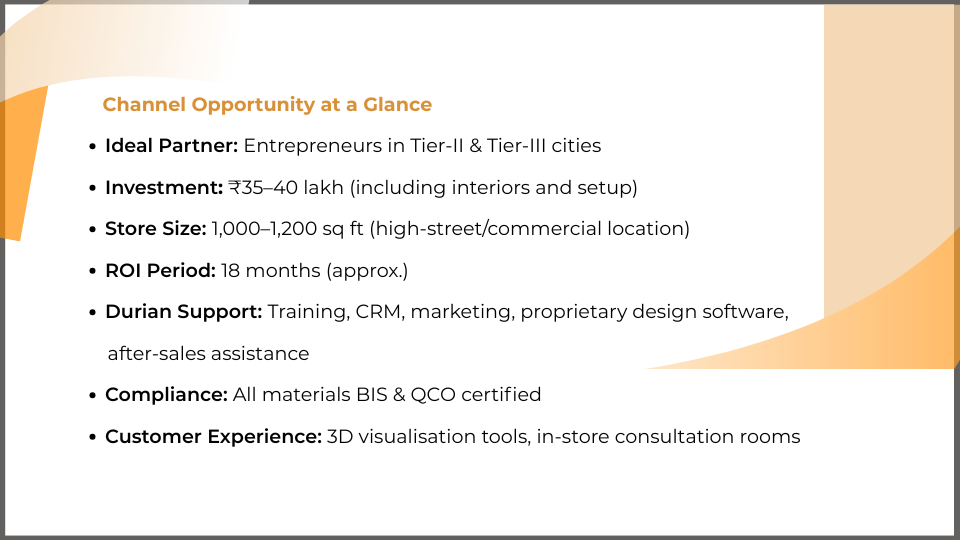
Initially, the company plans a 50:50 mix of company-owned and franchised stores, ventually shifting to a 30:70 ratio in favour of franchisees. Each Durian Modular Studio will feature a design consultation area and digital tools to help customers visualise layouts and finishes. Every franchise will begin with a trained modular designer, backed by Durian’s central training team in Mumbai, and installation support for project execution and after-sales service.
Setting up a Durian modular furniture franchise studio requires an investment of ₹35–40 lakh, including interiors and design setup. Durian estimates an ROI period of around 18 months, depending on location and market potential. The parent company provides franchisees with full support for promotion, advertising and brand visibility, and trains local teams extensively at its Mumbai unit. Designers are trained to use Durian’s customised design software—a proprietary system developed specifically for the company.
Karambelkar added that this model will gain traction in Tier-II and Tier-III cities, where entrepreneurs understand customer preferences and local dynamics. Durian will also assist partners with newspaper, billboard and digital advertising campaigns, and support their local promotional ideas.
Design, Quality and Production Strength
At the heart of Durian’s modular strategy is the idea of ‘aesthetic durability’—products that marry trendy design, strong aesthetics and long life. “Every design is created with durability in mind,” said Karambelkar. “Our quality team works closely with designers at each store to ensure brand uniformity.”
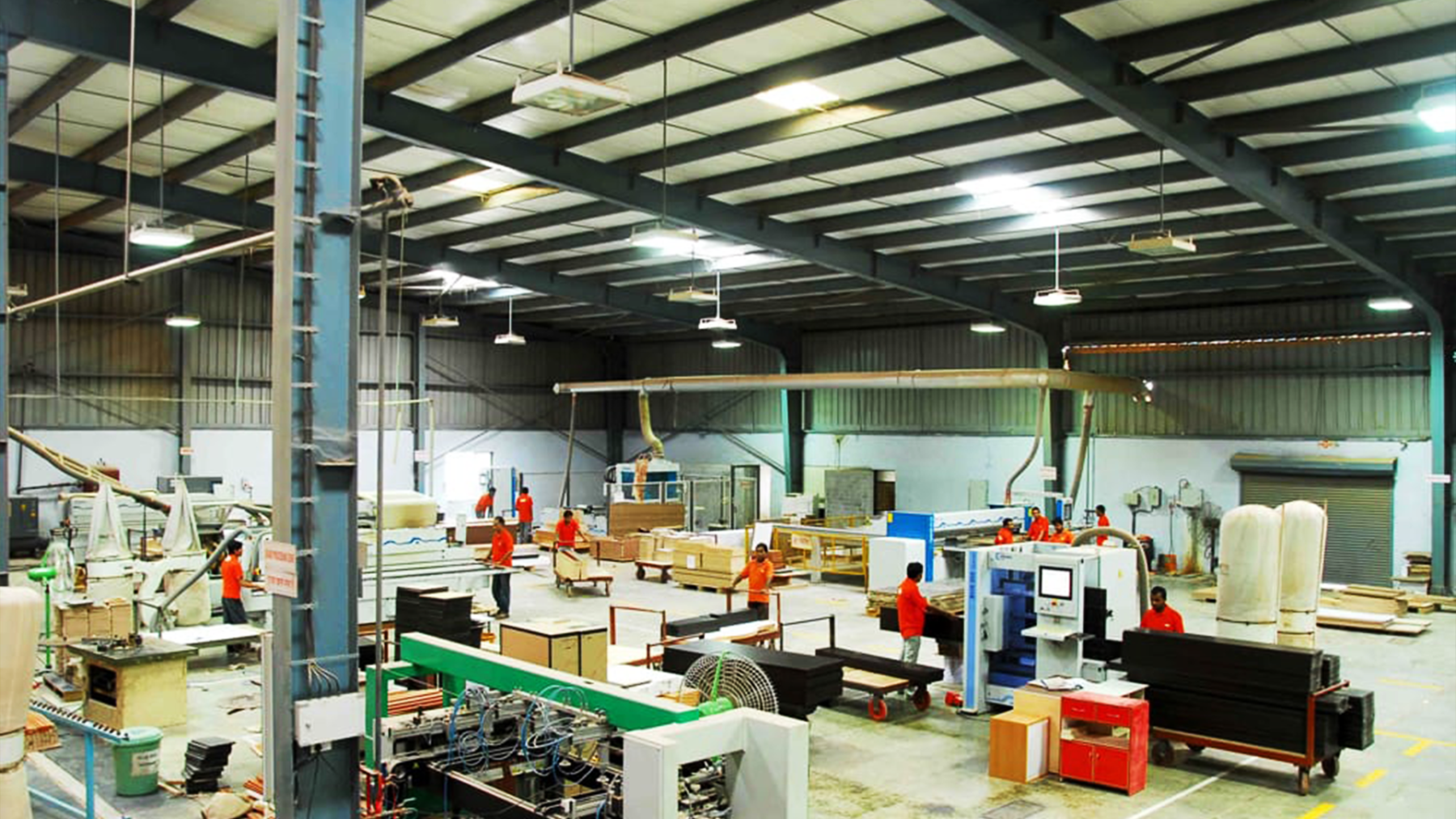
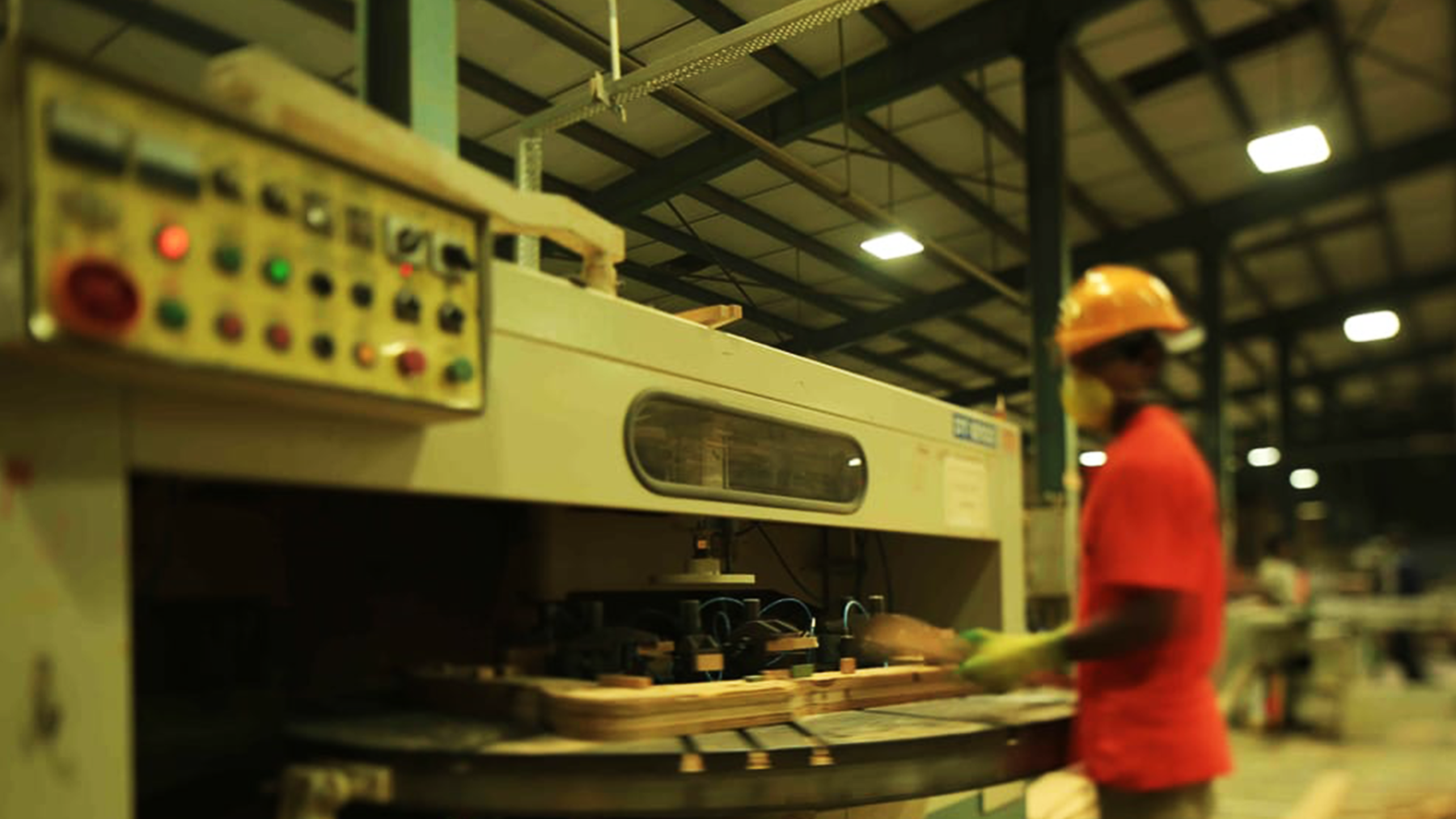
Durian’s manufacturing complex in Mumbai houses four specialised units—for modular furniture, standalone furniture, sofas, and veneers—all equipped with modern machinery. Designers and installers undergo regular training here to maintain consistency in design and installation. Durian also partners with reputed suppliers for laminates, veneers, panels and hardware, ensuring BIS and QCO compliance as part of its long-standing adherence to national standards.
The company uses a customised software platform—not generic programs like AutoCAD—to streamline design and estimation. Each store’s designer spends three to four hours with customers to understand their requirements, while LED screens display 3D visuals of layouts. Every design is vetted by a central QC team before production. “The most technology-charged item in the showroom is the laptop and screen,” Karambelkar quipped.
Durian’s modular offerings cater to diverse budgets, with ticket sizes ranging from ₹2–3 lakh to ₹8–9 lakh depending on finishes and customer choices. Each project typically takes around 90 days from order confirmation to installation. The company expects its modular vertical to contribute 15–20%—around ₹75 crore—to total revenues by FY 2026–27. Durian’s turnover for FY 2024–25 stood at approximately ₹500 crore.
Competing in a Crowded Market
Durian’s entry into the modular category pits it against both digital-first and legacy players. Yet the company is confident that its brand trust and supply-chain strength offer a decisive edge. “We already have a strong presence in Mumbai and Delhi and will extend our support to franchisees in smaller cities for local promotions,” said Karambelkar.
Durian positions itself in the premium modular segment, competing primarily with Sleek and Stanley in terms of price and quality. “Pepperfry, IKEA or Livspace are not direct competitors since their focus is price-led communication. Our positioning is higher,” he
said.
People and Vision
For Karambelkar, people are the cornerstone of Durian’s modular business. “Designers
are a crucial link between brand promise and customer satisfaction,” he said. “Our recruitment and training processes are rigorous because building expertise takes time.”
His focus on process-driven growth and long-term partnerships reflects Durian’s intent
to build a sustainable, scalable business.
With a strong team, expanding franchise network and a growing product portfolio, Karambelkar believes Durian’s modular business will emerge as a leader within five years. “We aim to be the number one brand in modular and full home customisation,” he said.
Though a late entrant, Durian’s brand legacy, adherence to standards and disciplined approach position it as a serious contender in India’s modular interiors market.
ALSO READ