By Gopal Dwivedi, Chief Design Officer, Livspace
When young people think about career opportunities in furniture and interiors, they usually imagine one of two roles: interior designer or carpenter. In reality, the industry supports a much larger and more interconnected career ecosystem, extending from the first customer enquiry and site measurement to design, product engineering, manufacturing, quality control, installation and final handover.
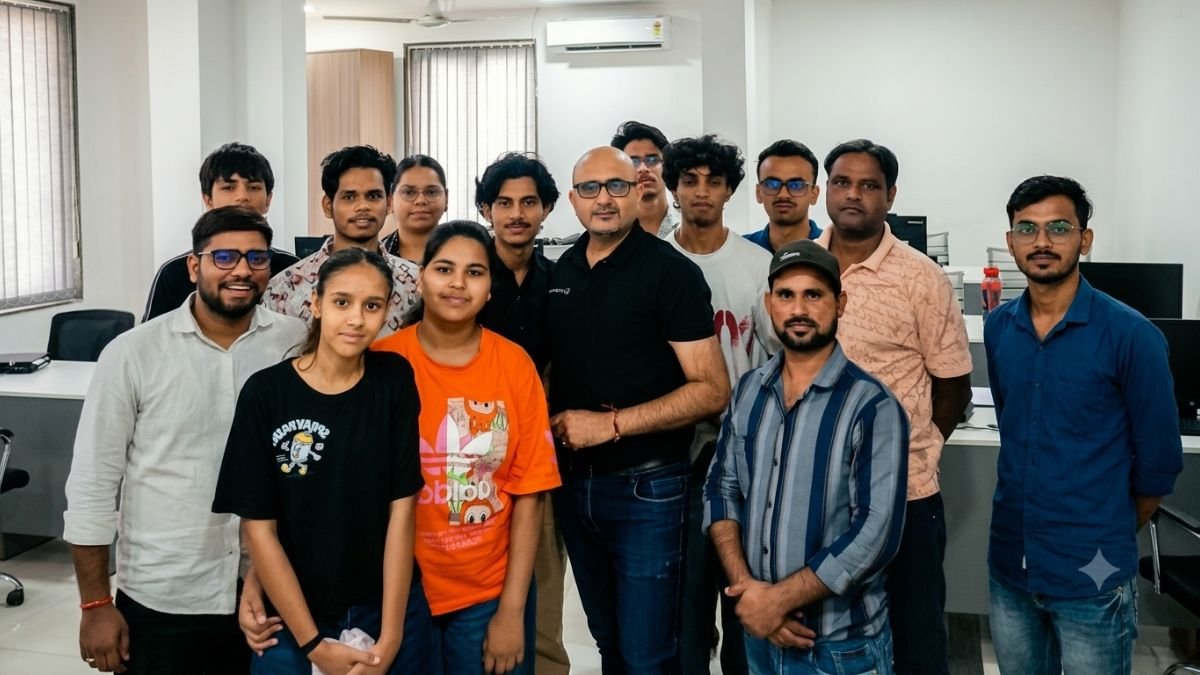
My recent interaction with young participants at the Furniture and Fittings Skill Council’s Udaipur Chapter reinforced a significant concern: career opportunities in furniture and interiors are becoming more specialised and diverse, but we have not communicated them clearly enough to the next generation.
The future of furniture and interiors will not be built by designers alone. It will require people who can connect design thinking with technology, materials, manufacturing intelligence, project execution and customer experience.
A Career Ecosystem Hidden Behind the Final Interior
Customers see the completed kitchen, wardrobe or home interior. They rarely see the number of professionals involved in creating it.
The journey can involve business development and sales professionals, site measurement executives, draftspeople, interior and project designers and visualisation specialists. Behind them are technical product designers and design engineers who use specialised CAD-to-
CAM systems to convert creative proposals into manufacturable components.
Once a design reaches manufacturing, production planners, machine operators, CNC programmers, quality professionals, material planners and product-development teams come into play. At the execution stage, site supervisors, project managers, installers and quality inspectors ensure that what was designed and manufactured is installed correctly.
Many of these roles offer clear paths for professional growth, yet they remain almost invisible to students.
A young person might begin as a site measurement executive and progress into project design or execution management. An installer can become a lead installer, trainer or installation-quality manager. A junior designer can specialise in sales, technical product design, manufacturing integration, category management or team leadership.
The industry must present these not as isolated jobs, but as connected career pathways.
Why has the Industry Struggled to Communicate These Opportunities?
Furniture and interiors in India have historically developed through a highly fragmented ecosystem. A large part of the sector has operated through individual designers, contractors, carpenters, local workshops and small retailers.
Consequently, roles were rarely formalised. One person often handled measurement, design, estimation, procurement and site supervision. Skills were learned informally, job titles varied between companies and career progression was not always documented.
Educational institutions have also tended to focus more heavily on the creative and aesthetic side of interior design. Students learn space planning, colours, materials and presentation, but often receive limited exposure to manufacturing systems, production drawings, hardware engineering, costing, installation, quality processes and project economics.
This creates a serious perception gap. Young people see the glamour of the finished interior, but not the industrial and technical system behind it.
The industry needs to communicate more clearly that furniture and interiors combine creativity with engineering, technology and business; that a successful career does not require everyone to become an interior designer; and that installation and site-based careers are specialised professional roles deserving training, dignity and visible career progression.
Technology is Changing Every Role, not Only Creating New Ones
Technology is gradually bringing lead management, site measurement, space planning, design configuration, quotation, BOM and BOQ generation, manufacturing, logistics, installation tracking and final handover into a more integrated digital journey.
A change made in design can influence the quotation, material requirement and manufacturing data. Production status can connect with delivery planning, while site teams can access updated drawings and installation information digitally. This integration changes what is expected from people entering the industry.
A designer can no longer remain concerned only with appearance; the designer must understand whether a concept is measurable, manufacturable, cost-effective, installable and serviceable. A site measurement professional must understand how incorrect dimensions affect design, production and installation. Technical product designers need knowledge of materials, hardware, machining, tolerances and software logic. Installers increasingly need to interpret technical drawings, work with precision hardware and use digital systems to document site conditions and report issues.
Technology is therefore not simply replacing manual work. It is raising the minimum level of understanding required in almost every role.
Artificial Intelligence Will Further Raise the Capability Threshold
Artificial intelligence is entering the interiors journey, from lead qualification and customer communication to concept generation, visualisation, product recommendation, estimation, documentation and project monitoring.
This does not mean human capability will become less important. Routine activities may take less time, while judgement, accountability and problem-solving become more valuable.
AI may generate multiple kitchen concepts, but a professional must still decide which proposal suits the customer’s space, budget, lifestyle and cooking habits. Software may produce a BOM, but someone must understand whether the construction logic is correct.
The roles most likely to remain important are those that combine human intelligence with a well-developed skill. Creativity without technical understanding will be insufficient. Technical knowledge without customer sensitivity will also be insufficient. The future belongs to professionals who can connect both.
What Young People Currently Misunderstand
My interaction with young participants in Udaipur suggested that many still perceive the industry through conventional and relatively narrow categories. Interior design is frequently understood as drawing, decoration and software presentation. Manufacturing and installation are seen as separate activities rather than extensions of the design process.
There is also a belief that completing a design degree or learning one or two software programs is sufficient preparation for a career. It is not.
A degree can provide an important foundation, but employability will increasingly depend on whether a young professional can understand the complete journey, from the customer brief to final handover.
Young people do not need to become experts in every function. They do, however, need enough cross-functional knowledge to understand how their decisions affect the rest of the value chain. The industry needs professionals who are specialists in their own areas but are
not isolated from the larger process.
As the industry becomes more organised and technology-led, career opportunities in furniture and interiors are likely to expand further across both existing and emerging functions.
The Roles That Will Gain Importance Over the Next Three to Five Years
Several areas are likely to become particularly important:
- Design technologists: Professionals who can connect creative design software with technical design, costing and manufacturing systems.
- Technical product designers and product engineers: People who understand construction logic, hardware, materials, machining and CAD-to-CAM workflows.
- Site measurement and digital surveying specialists: Professionals capable of converting real site conditions into accurate and reliable digital inputs.
- Project integrators: People who can coordinate design, factory, vendors, logistics, installation and customer expectations.
- Installation specialists and trainers: As products become more engineered, installation quality will increasingly determine the final customer experience.
- Quality and process professionals: Executives and managers who can establish checkpoints across design, manufacturing, packaging, delivery and installation.
- Category and product managers: Professionals who combine market understanding, consumer behaviour, material knowledge, pricing, sourcing and portfolio strategy.
- AI-enabled sales and design professionals: People who use technology to respond faster while retaining empathy, judgement and consultative ability.
- Material and sustainability specialists: Professionals who can evaluate substrates, surfaces, hardware, durability, environmental performance and responsible material choices.
- Service and lifecycle managers: As organised interior brands grow, post-installation service, maintenance and product lifecycle management will become increasingly important.
Preparing for a Career in the New Interiors Industry
A young person entering the industry today should begin with one strong foundational skill — design, engineering, manufacturing, sales, installation or project management — and then develop an understanding of the connected functions.
They should become comfortable with digital tools, but avoid confusing software proficiency with professional capability. Software can execute instructions; it cannot replace material understanding, construction knowledge, spatial judgement or responsibility.
They should learn how furniture is actually made: visit factories, observe installations, study hardware and panel materials, read technical drawings and understand how design decisions behave on a real site.
This need to combine technical knowledge with practical capability is also reflected in the WorldSkills standards for furniture trades, which set out the competencies expected of cabinetmakers, joiners and carpenters.
Communication, collaboration and problem-solving are equally important. The furniture and interiors journey involves continuous coordination between customers, designers, factories, vendors and site teams.
Most importantly, young people should become active learners. The tools used by the industry will continue to change. The ability to learn, adapt and connect new technology with practical knowledge will be more valuable than expertise in any single software platform.
The Industry Must Tell a Better Career Story
Furniture and interiors can become one of India’s most exciting employment ecosystems because they combine design, technology, manufacturing, craftsmanship, business and human experience. Yet the breadth of career opportunities in furniture and interiors
remains poorly understood.
But young people cannot aspire to careers they cannot see.
Companies, educational institutions, industry bodies and skill councils must work together to define roles, create structured learning pathways and demonstrate visible examples of career progression. Factory visits, site exposure, apprenticeships, technical workshops and
interaction with working professionals should become central to career education.
For employers, this also means treating workforce development as an ongoing capability-building exercise rather than simply a recruitment challenge.
The message to the next generation should be clear: this is not merely an industry for people who want to decorate spaces. It is an industry for designers, engineers, technologists, makers, managers, sellers, installers, trainers and problem-solvers.
The future professional will not be defined only by a degree or designation. They will be defined by their ability to combine human intelligence, specialised skill and technology to carry an idea successfully from design to manufacturing to installation.
That is where the real opportunity lies, and that is the career ecosystem the industry must now make visible.
Gopal Dwivedi is Chief Design Officer (Global) at Livspace and a modular interiors industry veteran with over two decades of experience spanning design, manufacturing, retail, technology and professional training. He has played a pioneering role in building scalable design-to-manufacturing systems in India and has trained and influenced thousands of interior design professionals through his work and authored books.
Enjoyed this article?
Receive Kitchen & Cabinetry Intelligence directly in your inbox.
Subscribe to newsletter. Click.
–
ALSO READ