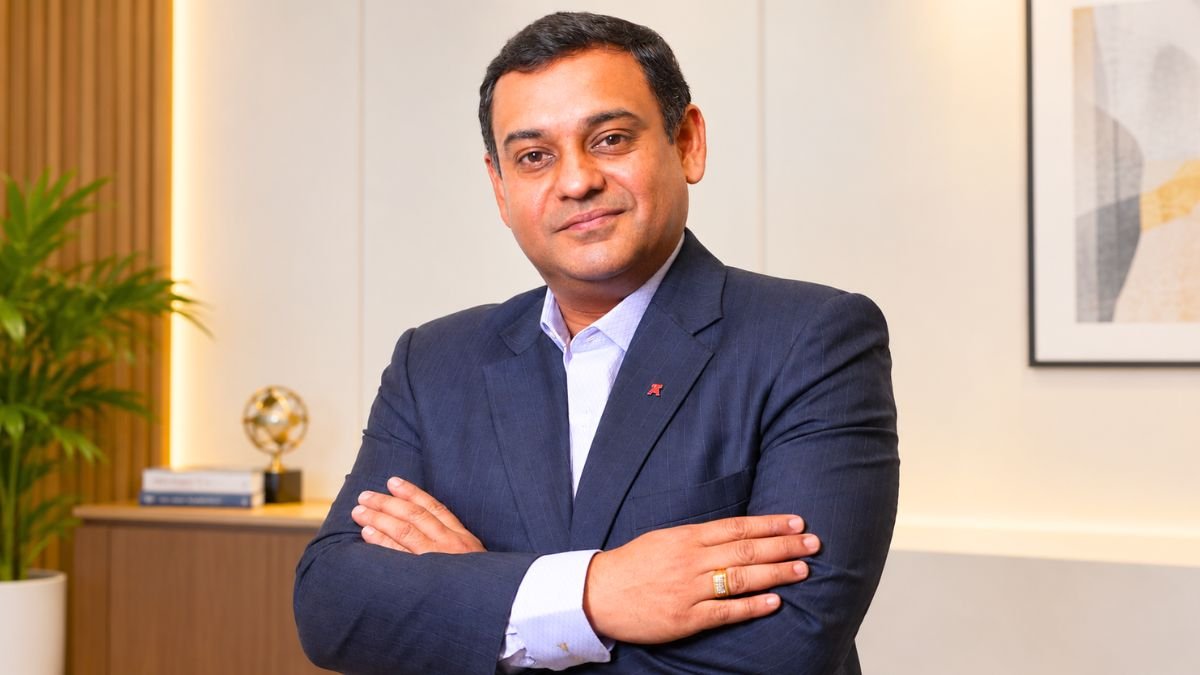
The India home improvement industry is no longer driven simply by the availability of products. As homeowners become more informed and businesses across the value chain become more organised, suppliers are increasingly being judged on the value they create beyond the product itself. According to Saurav Kumar Das, Director – Sales, Häfele South Asia, the industry’s next phase of growth will be shaped as much by partnerships, service and customer experience as by product innovation.
Having spent over a decade with Häfele across projects, hospitality, international business and sales leadership, Das has witnessed the market evolve from one focused largely on functionality to one where design, technology and integrated solutions increasingly influence buying decisions.
“Over the last 11 years, one of the most significant changes I have witnessed is the shift from a largely functional and need-based category to one that is increasingly driven by lifestyle and design,” he says. That shift, he believes, is changing not only what customers buy, but also how brands engage with them throughout the decision-making process. Customers today are more informed, exposed to global trends and willing to invest in solutions that deliver long-term value.
While homeowners are playing a larger role in purchase decisions, Das believes the biggest shift is that customers are no longer evaluating products in isolation. Instead, they increasingly expect complete solutions, expert guidance and dependable support throughout the buying journey.
Beyond Price and Product
As India’s home improvement industry matures, business customers are increasingly evaluating suppliers on capabilities beyond product and price. According to Das, product quality and competitive pricing remain essential, but they are no longer enough to differentiate one company from another. They have become the minimum expectation.
Business customers now look more closely at a supplier’s ability to ensure consistency in quality and supply, provide technical expertise, deliver reliable after-sales support and respond quickly as business requirements change. That places greater emphasis on investments in supply chain and service infrastructure, such as Häfele’s new automated logistics hub in Nagold, which is designed to improve responsiveness, strengthen customer support and reinforce the company’s global supply chain capabilities.
“The relationship has moved beyond individual transactions,” he says. “Customers increasingly value partners who can work alongside them over the long term, understand their business priorities and contribute to their growth.”
The relationship has moved beyond individual transactions.
This changing expectation is influencing not only channel relationships but also the capabilities suppliers need to build. Technical support, transparency and ease of doing business are becoming increasingly important as customers seek long-term business partners rather than vendors.
Multiple Channels, One Customer
India’s distribution landscape is also becoming more diverse. Rather than one channel replacing another, Das expects different formats to play complementary roles. Traditional dealers will continue to remain relevant because of their local relationships and market reach. At the same time, experience centres and kitchen studios are becoming increasingly important in helping customers understand integrated and technically complex solutions before making a purchase.
For Häfele, this approach is reflected in its network of Design Centres, where customers can experience complete solutions across kitchens, bedrooms, living spaces and other areas of the home.
Organised retail, furniture OEMs and digital platforms are also expected to strengthen their roles. However, Das believes the real opportunity lies in connecting these channels rather than viewing them as competing formats.
“India’s distribution landscape is becoming increasingly multi-channel,” he says, adding that maintaining a strong presence across channels allows Häfele to remain accessible while supporting customers throughout their decision-making journey.
Growth Beyond the Metros
Das believes that India’s home improvement industry will continue to benefit from urbanisation, rising incomes and growing aspirations in Tier II and Tier III cities. For Häfele, this means expanding its market reach while strengthening local partnerships and making its solutions more accessible through a wider network and deeper engagement with customers.
Alongside geographic expansion, Häfele is also investing in capabilities and solutions tailored to Indian market requirements, combining broader reach with greater local relevance.
Trust as a Long-Term Differentiator
One theme that runs consistently through Das’s perspective is the growing importance of trust. As products become more comparable and customers become better informed, long-term relationships are increasingly built on reliability, transparency and the ability to consistently deliver on commitments.
“The single most important principle is trust,” Das says. “Long-term partnerships are built by understanding a partner’s business, consistently delivering on commitments and remaining responsive as their needs evolve.” For companies operating in India’s home improvement
industry, long-term success will depend on building trusted partnerships and delivering integrated customer solutions.
As India’s home improvement industry enters its next phase of growth, the competitive advantage may lie less in selling individual products and more in building trusted partnerships, delivering integrated solutions and remaining relevant as customer expectations continue to evolve.

–
ALSO READ